Sweden's Riksbank wants parliament to prepare legislation for a digital krona, driven by geopolitical tension, the digital euro and the growth of stablecoins. Implementation would take at least five years, so preparations should start now.
The American financial press is waking up to the fact that crypto, digital assets and the tokenization of stocks are about to completely change how stock exchanges and stock trading work.
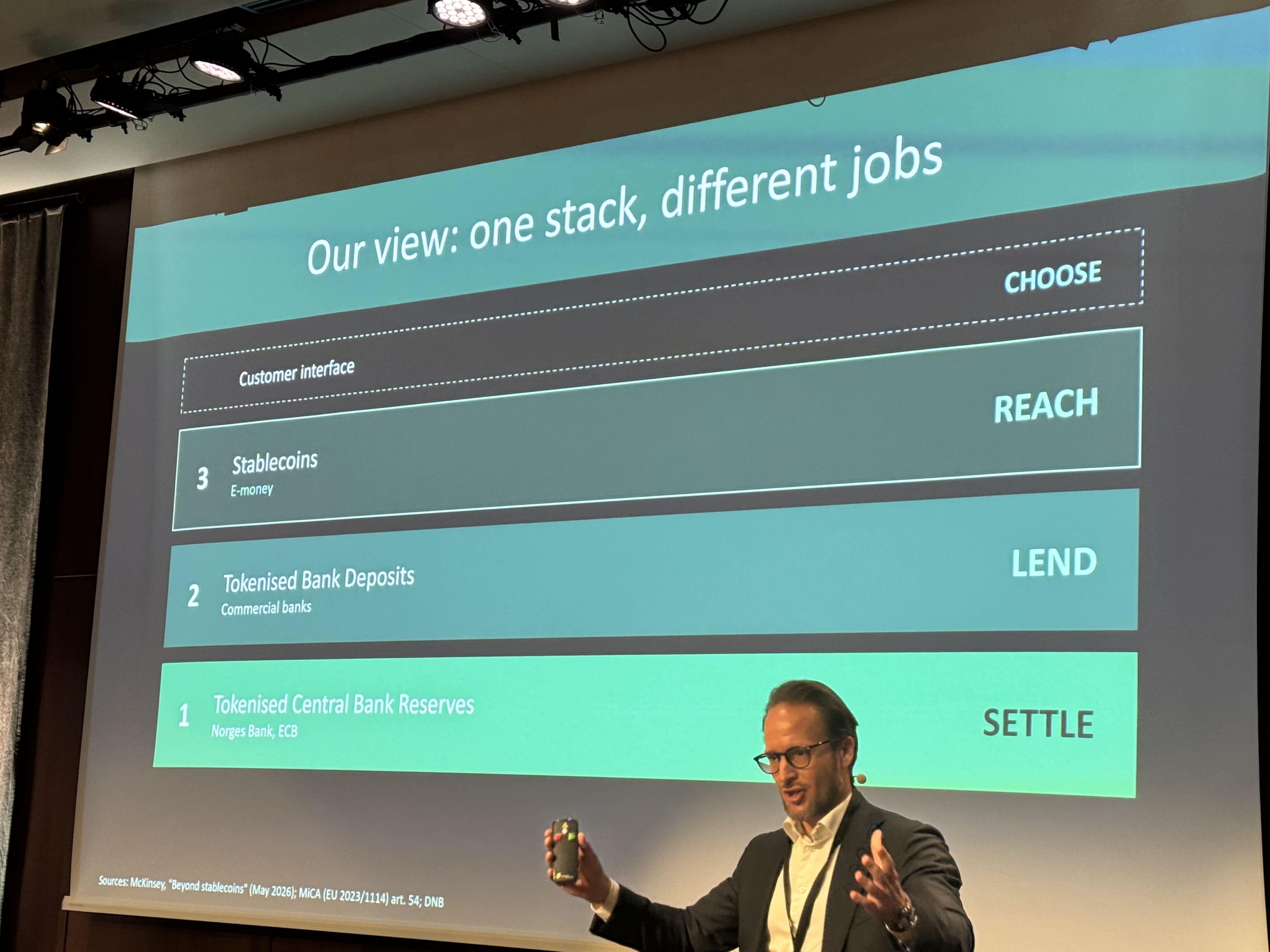
Bitcoin has become a mainstream portfolio asset, exchanges on both sides are tokenising each other's turf, and banks split between stablecoins and tokenised deposits. Kaupr Weekly's Morten Myrstad counts ten movements converging at once.
Gaming pioneer Animoca Brands, founded in 2014, and asset manager Franklin Templeton, founded in 1947, are teaming up on the NUVA platform for tokenized assets.
Exchanges are betting on tokenized stocks, but tokenization is built on blockchains like Ethereum and Solana — one way to get exposure, says Virtune.
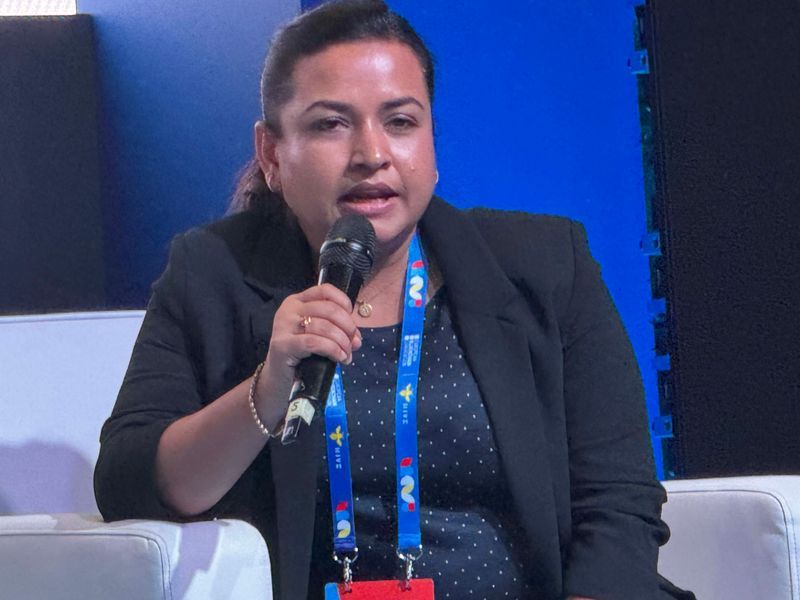
DNB and NBX disagree on whether stablecoins become infrastructure or stay a niche, while Nets sits on the fence, a Visa Summit panel shows.
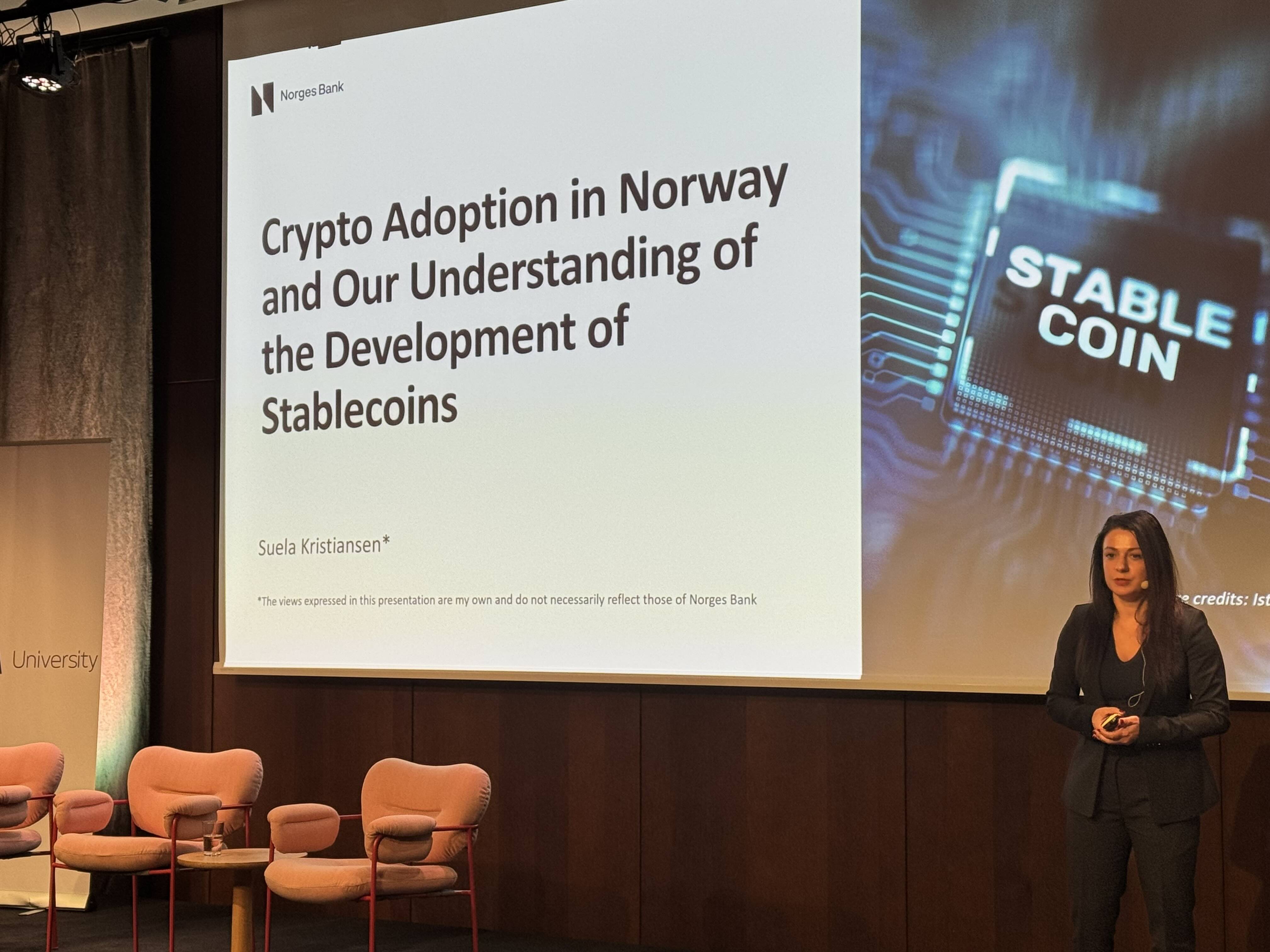
A Norges Bank survey shows stablecoin awareness is rising sharply in Norway, but that isn't translating into matching purchases or use.
DNB doesn't expect stablecoins to go mainstream soon, as instant payments, Vipps and tokenised deposits solve the same problems in Europe.
Eurøpe Consortium unites eToro and ten other firms to get the euro stablecoin EURØP into use, in a market where the dollar holds 99 per cent.
54 percent of affluent Swedes hold crypto. Yet Sweden is the most cautious of seven markets in CoinShares' new survey.
Businesses use stablecoins for supplier payments, treasury and cross-border commerce. 17 per cent of volume on Visa's stablecoin cards is business.
Done.ai launches buy now, pay later on business invoices in Finago. The supplier is paid at once, the buyer can pay over up to 36 months.