IBM and Oracle want to connect banks' systems to Swift's blockchain ledger, so banks can offer tokenised deposits and round-the-clock payments without replacing their current payment systems. IBM's solution is in beta.
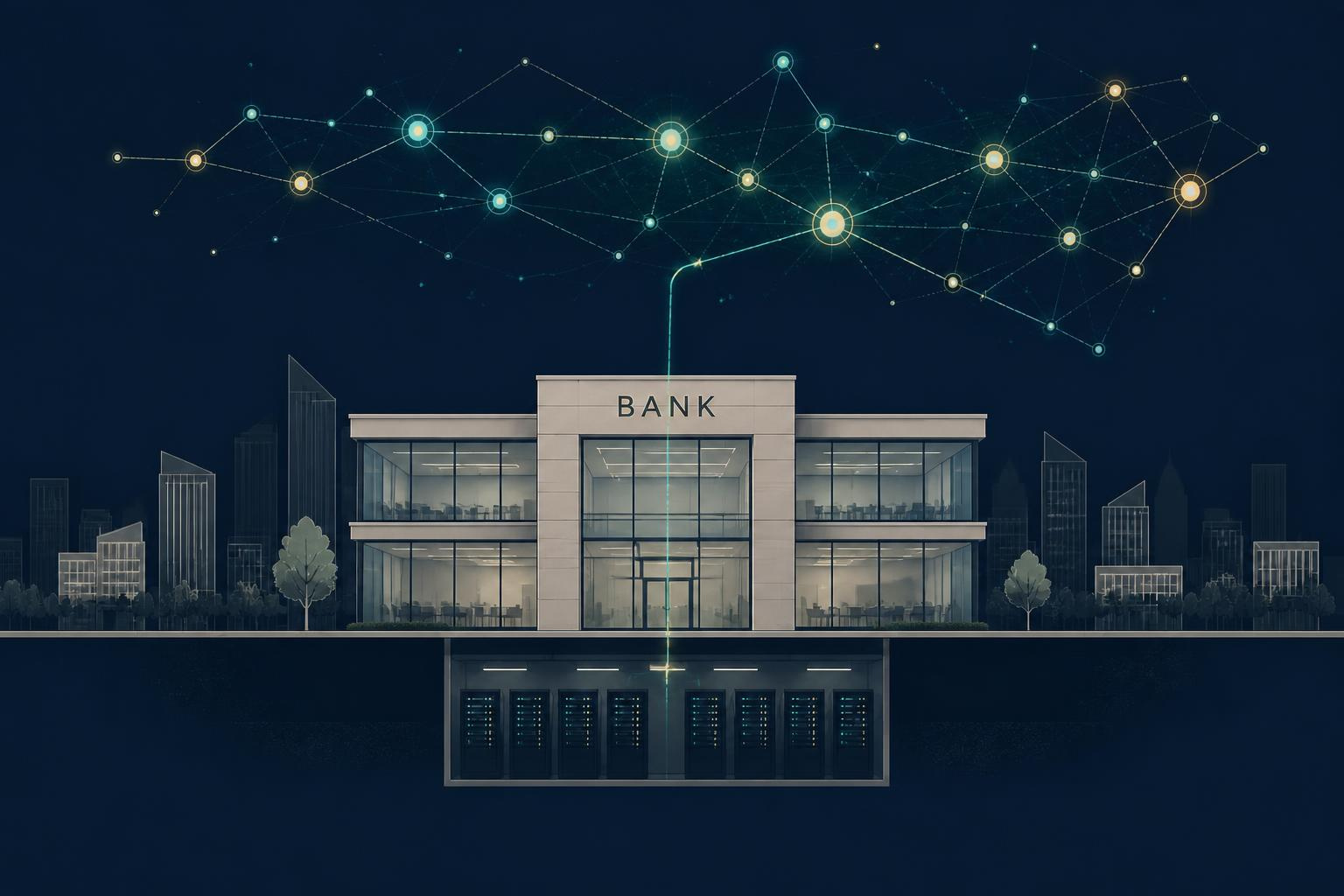
Photo: IBM and Oracle want to connect banks' existing systems to Swift's blockchain ledger. AI-generated illustration: Kaupr
Swift's blockchain-based ledger is designed to coordinate payments in tokenised deposits between banks, including at night and at weekends. Tokenised deposits are ordinary bank deposits in digital form, and they sit on the banks' own ledgers. Kaupr reported in July on how 17 major banks put the ledger to use.
For a bank to take part, the ledger has to be connected to the systems it already uses for payments, security and compliance. This is where the technology suppliers are now positioning themselves.
IBM's solution is called Digital Asset Haven, a platform for managing and securing digital assets that banks, governments and other regulated organisations can use. Clients of the platform can now connect to Swift's ledger in a beta version.
With a dedicated add-on, banks can instruct tokenised deposit transactions using standard ISO 20022 messages, the international standard for payment messages that banks already use. That lets them rely on existing message formats and routines rather than processes designed specifically for blockchains.
According to IBM, banks already taking part in Swift's programme have tested tokenised deposits on the ledger using IBM's platform. IBM does not say which banks.
IBM is also launching a beta version of Digital Asset Haven that can run in the bank's own data centre, on IBM's server platforms IBM Z and LinuxONE. The solution does not depend on public cloud services, and lets banks handle digital assets such as stablecoins and tokenised deposits entirely within their own systems.
The keys that authorise transactions are protected by dedicated security hardware. They are generated through formal processes that produce documentation banks can present to regulators, and they can be kept offline. The platform has been available as a cloud service since October 2025.
"The financial services industry is entering a new era where tokenised and traditional assets will need to move side by side. As institutions modernise payments and prepare for a future of always-on transactions, they need infrastructure that combines innovation with the security, resiliency and regulatory compliance requirements of regulated banking."
Tom McPherson, General Manager, IBM Z and LinuxONE
Oracle is integrating its solutions with Swift's ledger, so banks can use their own tokenised deposits in payments between banks. According to Oracle, banks can then manage traditional and tokenised payments within a single operating model.
Oracle's blockchain platform can run the contracts Swift's ledger uses, and also provides the blockchain itself, digital wallets, signing and smart contracts, meaning programs that execute transactions automatically according to predefined rules. The blockchain is compatible with Ethereum technology.
Oracle's payment software then connects the tokenised payments to the bank's regular processing of ISO 20022 messages, so everything follows the same flow from start to finish. Earlier this year, Oracle was certified by Swift as a payment software provider.
"Financial institutions need a practical, trusted way to connect emerging digital assets, including tokenised deposits, with established payment infrastructure while maintaining control, security and operational resilience."
Jamie Bullard, Vice President, Oracle Financial Services
What the announcements have in common is that banks should be able to adopt Swift's ledger without replacing the systems they already have. The tokenised deposits remain on the banks' own ledgers, and final settlement still takes place through established systems.
Neither company names the banks that will use the solutions. IBM's solutions are in beta, and banks that want to test the on-premises version can join a waiting list.
Sources: IBM, Oracle
You have read what you can read for free. With an account you get unlimited access to all news and articles on kaupr.io — and become part of the network of investors, professionals and builders following onchain finance.