

Norges Bank has for the first time named twelve financial institutions it is in ongoing contact with as it maps out tokenisation. Norway is also the only Nordic country without banks in Qivalis, the bank consortium behind a euro stablecoin.
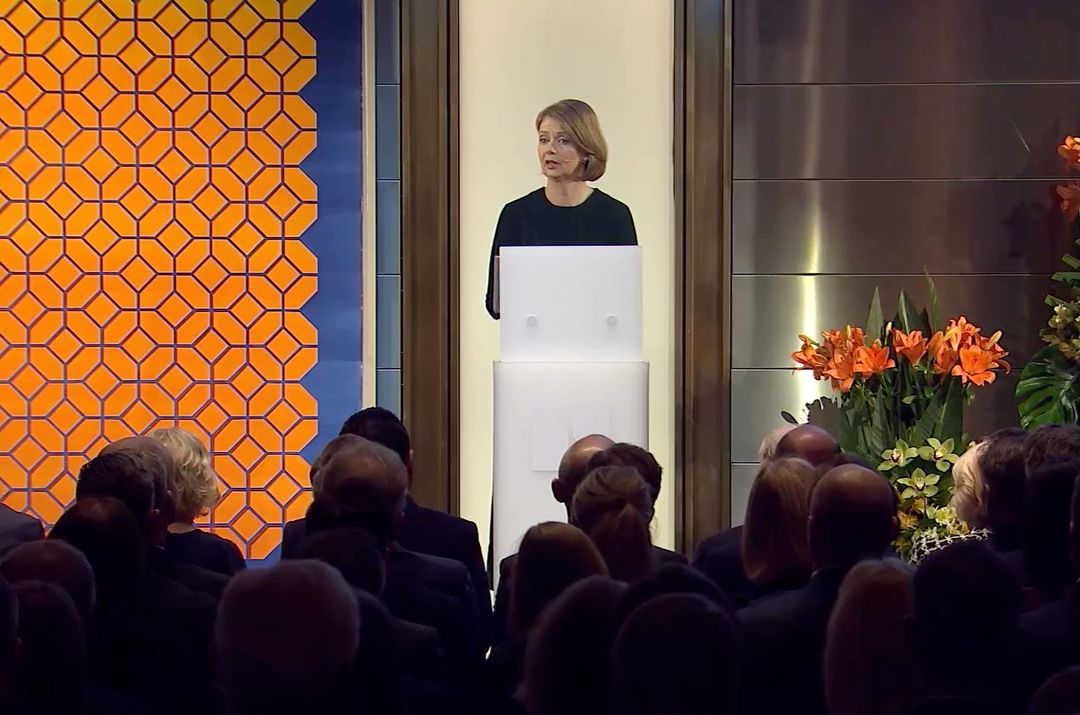
Norges Bank has said at regular intervals that introducing central bank digital money is not on the table for now, as here (photo) in the 2026 annual address by Governor Ida Wolden Bache.
That Norges Bank and DNB have tested tokenised bank deposits together has been known for some time. On Monday 7 September the central bank published a post on LinkedIn naming twelve financial institutions it is in ongoing contact with as it maps out tokenisation.
Tokenisation means representing values such as deposits, money or securities as entries in a shared digital ledger, so that transfer and settlement happen in a single operation. Digital central bank money, abbreviated DSP in Norwegian, is the central bank's own money in digital form.
The names arrive in a week when digital money is on the agenda in several places across the Nordics: banks in the other Nordic countries have joined Qivalis, while Norwegian banks have chosen differently, and on Tuesday leaders from banking, payments, public authorities and crypto firms gather for a closed roundtable in Oslo.
In the LinkedIn post, Norges Bank writes that it is working with the financial industry on exploring tokenisation. The named participants are DNB Carnegie, DNB, Kommunalbanken, Citi, LOKALBANK, SpareBank 1, Bits, KLP, Eika, Euronext, Nordea and SEB.
The central bank repeats its December 2025 wording that it has found no basis for introducing DSP now, but that work on both DSP and tokenisation continues, in order to understand how the payment and financial system may develop with the technology. Concrete tests are to give practical experience of how it works, and the bank is also gathering information on similar work in other countries.
Beyond the post there is no publication. No report, no project description, no timetable — only the names and a description of what the exploration involves.
When Norges Bank concluded in December 2025 that there was no basis for introducing DSP for the time being, the decision covered both forms: DSP for the public and DSP for settlement between banks. Knut Sandal, Director of Payments Analysis and Innovation, stressed to Kaupr that this was the assessment at that point. He also said the technical trials of tokenisation and DSP would continue, including alongside the financial industry.
Norges Bank had by then examined tokenised bank deposits with settlement in DSP, and that testing had been carried out partly with DNB. That is the part which has been known. Monday's post widens the picture to the other eleven names.
DNB is also among those that have recommended introducing DSP for settlement in combination with tokenised bank deposits, because the two serve different purposes. Tokenised bank deposits are not under investigation by Norges Bank, but would amount to a modernisation of transfers that already take place between financial market participants.
Digital money comes in four models, and what separates them is who issues the money. Digital central bank money is issued by the central bank, either to the public or for settlement between banks. Tokenised bank deposits are issued by the banks themselves. Stablecoins can be issued by private companies, and by groups of banks acting together — which is precisely what Qivalis is.
The two central bank variants are on hold in the Nordics, where the Riksbank is waiting for the ECB's decision on a digital euro and Norges Bank is in a comparable position. Attention is therefore on the other two. Tokenised bank deposits digitalise what money already is: around 90 per cent of the money in a modern economy is deposits and loans, that is ordinary bank money, not central bank money.
The models do not exclude one another. They look set to cover different use cases and types of payment, and a bank can adopt stablecoins without taking part in issuing them.
Qivalis was set up in the autumn of 2025 with nine banks, among them Danske Bank and SEB. DNB was informed of the plans and chose to stay out. Since then the consortium has grown to 37 banks from 15 European countries, with Nordea, Handelsbanken, Swedbank, Jyske Bank, OP Pohjola and Landsbankinn joining. Every Nordic country is now represented, with the exception of Norway. The stablecoin is due to launch in the second half of 2026.
Nordea and SEB appear in both places: in Qivalis, and among the twelve Norges Bank names. It shows this is not an either–or for the banks, but a question of which roles they take in which model.
The Norwegian difference lies in which type of digital money gets most of the time and resources. DNB is pursuing tokenised deposits, as the only Norwegian bank with a targeted and continuous effort in the area, and is at the same time building a wallet designed to support digital money from different issuers and in different currencies, Qivalis included.
"We have therefore concluded that ownership in issuing a stablecoin is not right for us at this time, but we are following developments in the market generally, and Qivalis in particular, closely," Ole Morten Sunde, Head of Emerging Business – Products at DNB, told Kaupr in May.
Kaupr's assessment at the time was that the absence was not a lag but a calculated choice: to own the infrastructure that gives access to all the models, rather than tying up capital and governance in one of them.
The qualifier in the central bank's wording has been consistent. In December it sat in the phrase for the time being, and in the needs that may change: the bank should be ready to introduce DSP if it turned out to be necessary for an efficient and secure payment system.
Wolden Bache used the annual address in February to dismiss bitcoin as a means of payment, play down the significance of stablecoins in Norwegians' everyday lives and state that Norway does not need central bank digital money now. The same time limit, a year later.
In March the bank continued to map DSP, stablecoins and tokenised bank deposits as part of its work on the payment system of the future. As Kaupr understood it, this remained an internal process, with the work not described as a new phase. The bank's own account of where the matter stands is on its page on its assessments of DSP.
The Nordic Blockchain Association is holding a dinner and strategic roundtable in Oslo on 8 September, bringing together leaders from banking, payments, public authorities and crypto firms alongside the association's own members. The topics are stablecoins, digital asset investments, regulation and developments in the Nordic market seen in an international perspective. The meeting is closed and by invitation, with DFNS as partner.
The association holds such conversations regularly across the Nordic capitals, and frames the question this way: it is no longer about whether banks and financial institutions should engage with digital assets, but how, with whom and how fast. It is the same discussion running through Norges Bank's mapping, only without a public record.
Sources: Norges Bank, DNB, Qivalis, Nordic Blockchain Association, Kaupr
You have read what you can read for free. With an account you get unlimited access to all news and articles on kaupr.io — and become part of the network of investors, professionals and builders following onchain finance.