
While the rest of the Nordics have joined Qivalis, DNB has chosen a different path. Not because they have overlooked stablecoins, but because they have analyzed the entire digital currency landscape — and arrived at a different conclusion.
Speculation has been ongoing since September 2025: Why is Norway’s largest bank missing from Qivalis, the rapidly growing banking consortium for a regulated euro stablecoin? Now that the consortium counts 37 banks from 15 European countries — and every Nordic nation except Norway is represented — the question has become increasingly pressing.
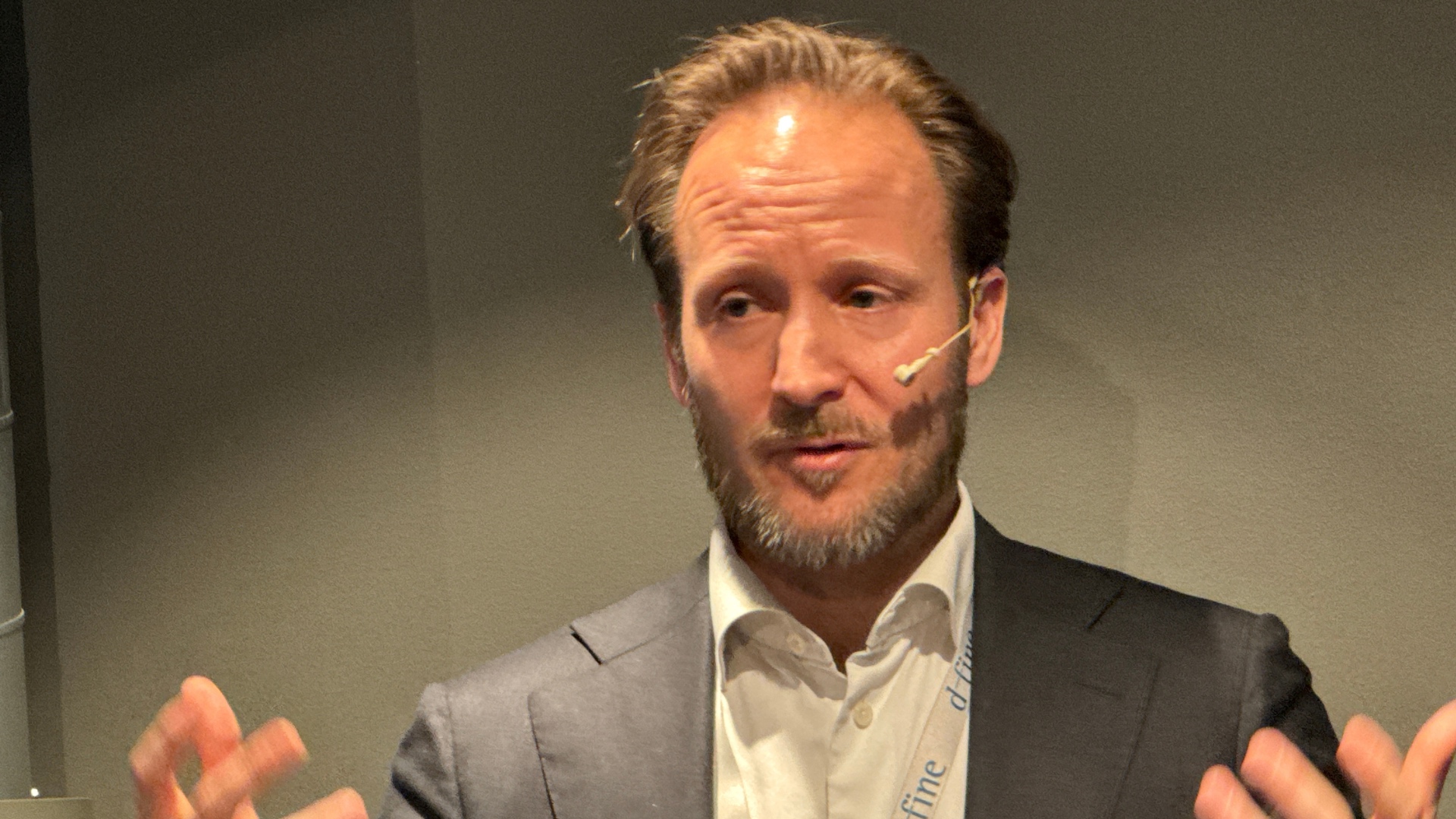
However, we at Kaupr assess that DNB's absence is not due to passivity; the answer is far more considered and strategic than many assume. We have been in contact with Ole Morten Sunde (pictured) at DNB. Aside from a brief comment which can be read further down, this article represents an independent analysis by Kaupr.
To understand the strategic choice now taking shape, one must first look at the broader landscape. In principle, there are four models of digital money, each with fundamentally different foundations: central bank digital currencies for the general public (retail CBDC), central bank digital currencies for banks (wholesale CBDC), tokenized bank deposits, and stablecoins.
In the Nordics, authorities have temporarily put the CBDC track on hold. Sweden's Riksbank has pilot-tested a state-backed e-krona for several years but is waiting for the ECB to make a decision on a digital euro before moving forward. Norges Bank is in a similar position. A sovereign Nordic digital currency issued by the central bank itself is therefore still years away.
However, this does not mean we are facing a classic, commercial race where the winner takes all. Rather, what we are witnessing is the emergence of an ecosystem where different digital money solutions will serve entirely different purposes. With state-backed options delayed, the spotlight shifts to private alternatives. Yet here too, the structural differences are profound: while stablecoins represent privately issued money – even when pegged to a traditional currency – tokenized bank deposits are a direct extension of the banks' own, existing infrastructure.
Here is a distinction rarely mentioned in the Qivalis debate: around 90 percent of the money circulating in a modern economy is not central bank money. It consists of deposits and loans — commercial bank money. This is the very reason a bank run is theoretically possible. The money is not physically there; it exists as claims.
Tokenized bank deposits do not digitalize a new type of money. They digitalize what money already is within the existing system — with the full traceability, programmability, and settlement speed enabled by blockchain technology. For large-scale transfers, the counterparty is another bank deposit, not a third-party stablecoin.
This is the track DNB has chosen to pursue, being the only Norwegian bank with a targeted and continuous commitment to tokenized deposits. And they are not alone in this thinking: their work has been conducted in close cooperation with Norges Bank.
Parallel to the tokenization track, DNB is developing a wallet solution designed to support digital money from various issuers and in different currencies — including stablecoins. Ole Morten Sunde, Head of Emerging Business - Products in DNB, explains the strategy to Kaupr:
"It is positive that European banks are uniting around a common stablecoin infrastructure. DNB's digital asset strategy is aimed at providing our customers with access to digital money and securities. The wallet solution we are developing is designed to support stablecoins from various issuers and currencies. This gives us the flexibility to connect with the solutions demanded by our customers, including Qivalis. We have therefore assessed that ownership in the issuance of a stablecoin is not right for us at this time, but we are monitoring developments in the market in general, and Qivalis in particular, very closely."
The logic from DNB's perspective is that the various models of digital money will not fully displace one another — they will coexist. A bank with a neutral wallet infrastructure can connect to whichever solution the market ultimately adopts, without locking up capital and governance in a single specific issuer beforehand.
Qivalis is no longer the only alternative to consider. On the exact same day that Qivalis announced its expansion to 37 banks, AllUnity — a Frankfurt-based e-money institution established by DWS, Flow Traders, and Galaxy — launched SEKAU, the first regulated stablecoin in Swedish kronor. This represents a MiCA-regulated private e-krona in a market where the sovereign equivalent remains years away.
Sweden now has two parallel stablecoin initiatives: major Swedish banks inside Qivalis on the euro side, and AllUnity with a SEK stablecoin. Norway has no banks in Qivalis — but it has DNB, which is actively testing tokenized deposits with Norges Bank and building infrastructure to interface with all digital currency alternatives.
Here lies the analytical core of DNB's position, as Kaupr evaluates the landscape: DNB does not foresee a single type of digital money taking over everything. They are gearing up for a world where retail CBDC, wholesale CBDC, tokenized deposits, and stablecoins coexist — and where different models dominate different use cases and transaction types.
From this perspective, the Qivalis model looks less compelling. Being one of 37 — soon 38 — banks in a consortium with a single, predefined vision to issue one specific type of digital money is neither particularly innovative nor obviously commercially attractive for a bank of DNB's scale and ambition.
Our assessment is that DNB has concluded it is more strategically viable to own the infrastructure for accessing all models (via its proprietary wallet) rather than becoming a minority stakeholder in just one of them.
No one knows for certain yet. Since this is not a traditional race with a single winner, it is a question of which models will find traction in which areas. The stablecoin market in euros and Nordic currencies is far from consolidated. Qivalis plans to launch in the second half of 2026 and remains a project under development. Tokenized deposits are also not yet a finished product in full operation.
As Kaupr sees it, however, one thing is clear: DNB’s absence from Qivalis is not an accidental omission or a sign of Norway lagging behind on the digital agenda. Our assessment is that this is a deliberate, analyzed, and calculated strategic choice — based on a clear hypothesis that different forms of digital money will coexist and serve entirely different purposes within the financial infrastructure of the future.
You have read what you can read for free. With an account you get unlimited access to all news and articles on kaupr.io — and become part of the network of investors, professionals and builders following onchain finance.