
In her annual address on Thursday, Norway’s central bank governor rejected bitcoin as a means of payment, played down the importance of stablecoins in everyday life and stated that Norway does not need central bank digital currency at this point
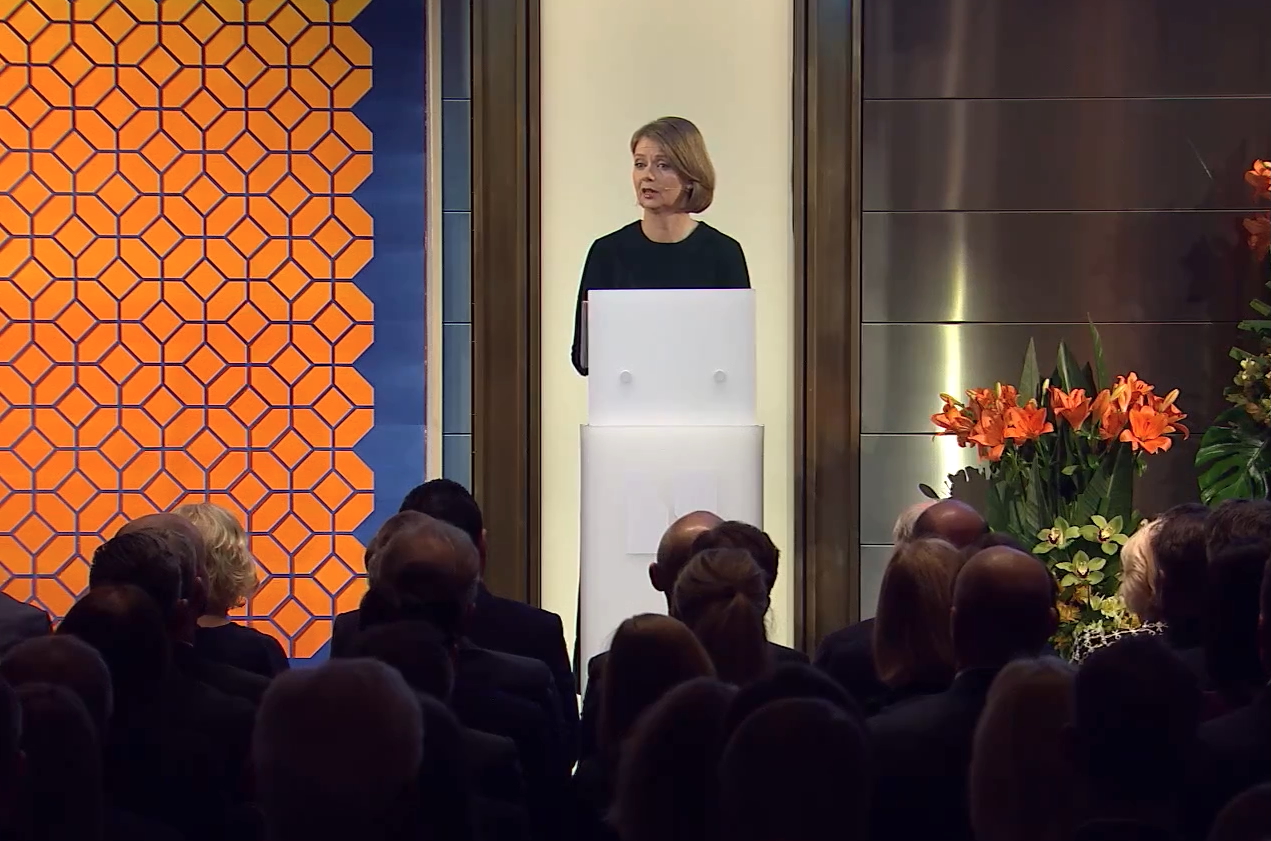
The governor’s annual address is a major yearly event that attracts strong interest from politicians, business leaders, financial circles and the media.
Norway's central bank chief started with Satoshi Nakamoto's launch of Bitcoin in 2008. In a brief note, he, she, he or they -- no one knows for sure -- presented a payment system based on cryptography. The payment system was a blockchain, and bitcoin was the monetary unit in the system. There, two parties could pay each other digitally in a secure way, without having to put their trust in a bank or other third party. The great innovation was that trust could be achieved with technology alone.
In retrospect, she stressed, it has turned out that bitcoin does not work very well as the means of payment it was intended to be. Instead, it has become an investment object for people willing to take big risks, or who are wary of established institutions and will place their funds in something other than dollars or other national currencies. Bitcoin has been followed by tens of thousands of other cryptocurrencies, but none of them has been given any role as a means of payment.
Then she transitioned to stablecoins, which appeared in 2014 and were referred to as monetary kindereggs. They were based on blockchain technology, were secured by other assets and had stable value. Stablecoins have become a talking point among many with an interest in finance, and the Financial Times named the term one of its words of the year.
The issuers of stablecoins keep a reserve of bank deposits and securities that are supposed to ensure that stablecoins constantly have the same value as regular money. That makes stablecoins better suited for payment than cryptocurrencies like bitcoin. The scale is not large today, but some estimate that the amount of stablecoins will multiply in the coming years. Yet the central bank chief posed the rhetorical question: What do they really mean to us? For now, her answer was: not so much.
The central bank chief pointed out that until now stablecoins have mainly been used for buying and selling bitcoin and other cryptocurrencies. They are also used somewhat to send money across borders, but hardly to buy ordinary goods and services. The fact that stablecoins are mostly only available in dollars makes them impractical to use as a means of payment in Norway anyway.
She also stressed that stablecoins are not completely “stable” in practice. Its value against the dollar normally varies slightly, and there have been episodes of more serious breaches of the promise of fixed value. The issuers have no central bank in their backs, and for a long time also lacked regulation.
In her speech, she pointed out that traditional money does a much better job as a means of payment. Norwegian kroner can be spent almost everywhere, albeit not on blockchains. A thousand dollars is worth exactly the same as a thousand dollars in a bank account. A thousand kronor in an account in one bank is worth as much as a thousand kronor in another bank. At the same time, crowns move quickly and seamlessly between banks when we pay.
She pointed out that we like to take it for granted that money works like this, but that it hasn't turned out that way by itself. It is the result of laws, rules and institutions established to secure the monetary system. Banks can create money and make payments, against which they must meet strict regulatory requirements. The trust in bank deposits as money is also backed by a deposit guarantee. Norges Bank is the hub of the system. Like the banks' bank, the central bank ensures that all kroner are equal.
Although we have good money, Norway's central bank governor opined that stablecoins or similar forms of money may become more important in the future. Blockchains can evolve to become marketplaces for several kinds of assets, such as stocks, bonds and real estate. Payment with stablecoins can also become so effective that they are adopted in more traditional parts of the economy.
If new forms of money develop further, she believed that regulation must be reviewed and adapted to the new terrain. Then the authorities must also consider whether we need public money on blockchains, in the form of digital central bank money. In her speech, she stated that Norges Bank has concluded that we do not need such money now, but that this may change in the future. Banks also need to think through how to avoid ending up in the back.
In conclusion, she lifted her gaze from technology to geopolitics. New money is not just about technological solutions, but also about power and dependence between countries and regions. The European Central Bank is working to introduce a digital euro -- digital central bank money available to the general public. The aim is, among other things, to strengthen preparedness and make the payment system less dependent on non-European companies.
With that, Norway's central bank governor placed the discussion about bitcoin, stablecoins and digital central bank money in a larger frame: The krona still works well as money, but Norway needs to pay close attention to how new digital money evolves - both technologically and geopolitically.
You have read what you can read for free. With an account you get unlimited access to all news and articles on kaupr.io — and become part of the network of investors, professionals and builders following onchain finance.