
K33 is now prioritising Norway, Sweden, Denmark and Finland under its new MiCA licence, but isn't chasing retail customers. The company instead wants wealthy private clients, family offices and institutions not tied to any particular jurisdiction.
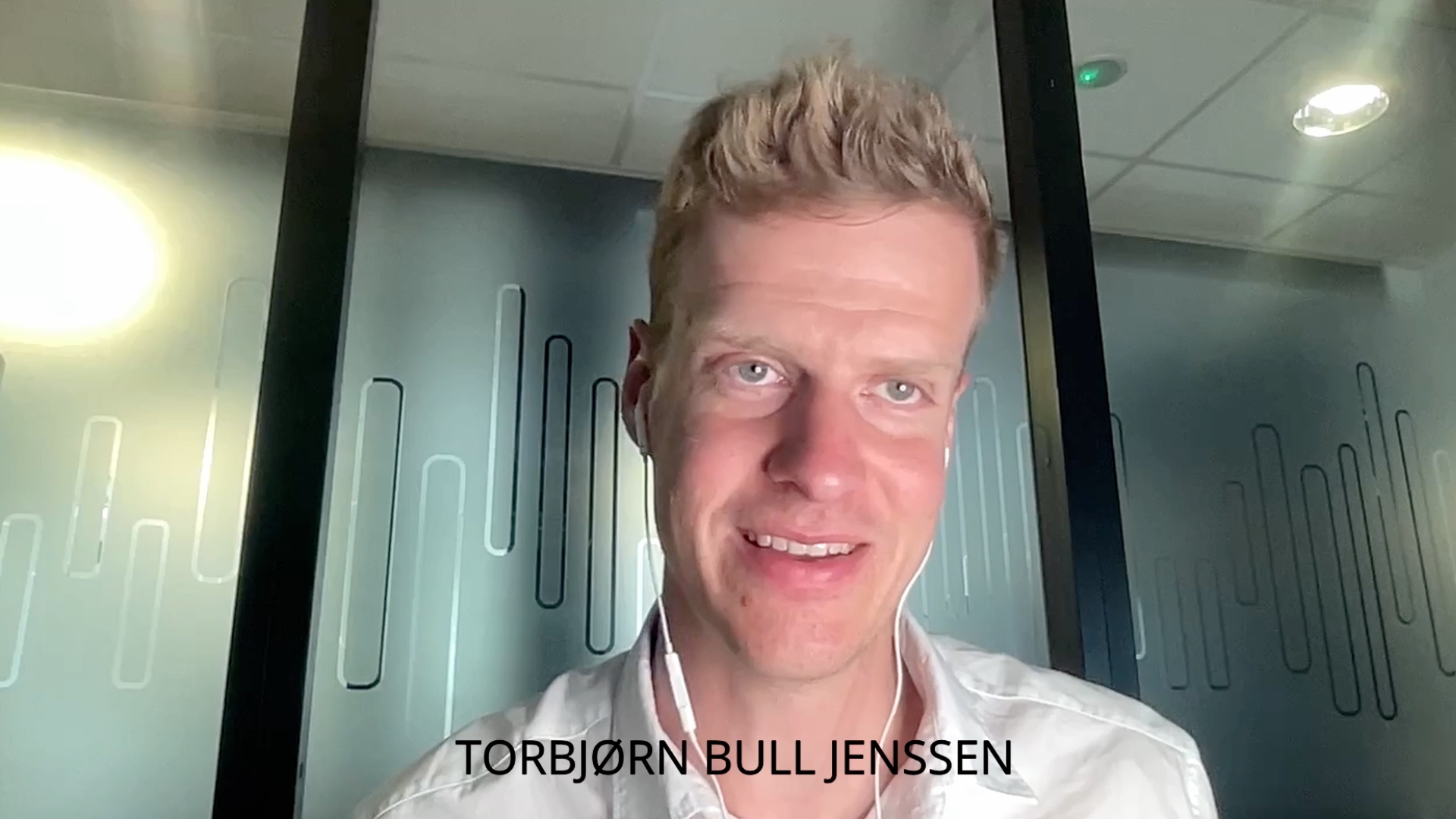
K33 received its MiCA licence from Finanstilsynet this week, allowing it to offer services across the entire EU/EEA through so-called passporting. Shortly after, Morten Myrstad interviewed CEO Torbjørn Bull Jenssen in an exclusive video interview for Kaupr, about what the MiCA licence means, what K33 will use it for, and where the company goes from here. In the conversation, Bull Jenssen makes clear where the company is first turning its attention: not a broad European push, but wealthy private clients and institutions in the Nordics — a segment he describes as not tied to any particular jurisdiction.
"It's a segment that isn't necessarily tied to a specific jurisdiction," Bull Jenssen tells Kaupr.
You can watch the full video interview below and on YouTube.
"MiCA is existential for us," says Bull Jenssen. The licence isn't just a requirement to keep operating as it does today — it's also a requirement to grow more efficiently. It allows the company to enter new markets through passporting instead of relying solely on clients reaching out themselves, and it opens the door to partnerships with traditional financial institutions, which themselves require a counterparty to be licensed before entering a partnership. According to Bull Jenssen, the licence brings K33 closer to realising deals that have already been in the works.
K33's main focus is private wealth management: High Net Worth Individuals (HNWI), family offices and institutional clients. Although K33 is listed in Sweden and runs its operations from Norway, Bull Jenssen describes the company as a Nordic player offering some of the best rates in the world in Swedish, Danish and Norwegian kroner, as well as euros. The MiCA licence in principle gives K33 access to the entire EU/EEA area, but in the first round of passporting the company will prioritise Norway, Sweden, Denmark and Finland as a starting point — without that meaning local offices or marketing aimed at ordinary consumers.
While other players such as Safello and Firi have built themselves up in the retail segment in Sweden and Norway, K33 is targeting larger clients who need deep liquidity and personal attention. This, according to Bull Jenssen, is exactly where K33 differs from the other Nordic crypto exchanges. "We're a sharpshooter. We don't serve smaller retail clients. That's the only thing we do," he says, dismissing the idea that K33 is entering a fight with Firi and Safello over private customers. K33 also offers lending services secured against Bitcoin — not just a trading platform.
Bull Jenssen points out that both Denmark and Sweden have been tough markets in the retail segment because of tax rules and uncertainties. For companies that need to on- and off-ramp stablecoins, and for family offices building Bitcoin exposure through a corporate structure, the picture looks different. According to Bull Jenssen, the challenge is solvable, and K33 is now working on tax-optimised structures designed to give more favourable tax treatment for such exposure when held within a company.
Bull Jenssen was far more optimistic about banks' prospects when MiCA first arrived, but now sees that they remain hesitant. A full MiCA licence is a heavy undertaking even for a bank, even though it can in principle be applied for through a simplified notification. He therefore expects growth to largely come through partnerships, where the bank doesn't offer crypto services itself but links up with a licensed player like K33 — ultimately integrated into the same app.
He believes it will take several years before the big banks go "all in", and that independent wealth managers, smaller private banks and brokers will be the first to take the step.
K33 has already bought into a Canadian company, and has a partnership with Sweden's BTCX, which according to Bull Jenssen has invited several industry players to talks. Asked whether Goobit could be a candidate for a merger, he says K33 works well with them — "so who knows."
Consolidation isn't K33's core focus, but Bull Jenssen sees clear synergies with players that complement its own business. With the MiCA licence in hand, K33 can in principle help well-functioning but unlicensed companies continue to exist through such partnerships.
The day before the interview, it became known that Bitmynt, described as Norway's first crypto company, is shutting down. Bull Jenssen believes MiCA is a key driver behind the closure. He points to crypto analyst Sturle Sunde, who has noted on X that the rules in practice treat a crypto exchange like Bitmynt — which doesn't even offer custody of customer funds — almost like a systemically important bank. In his view, effective AML regulation should be enough; the detailed documentation requirements are excessive and create a high barrier to entry that benefits established players like K33, but which he believes is a loss for society.
As a curiosity, it's worth noting that Bull Jenssen bought his first Bitcoin from none other than Bitmynt and Sturle Sunde.
Bull Jenssen doesn't expect an upcoming MiCA II to ease this pressure — on the contrary, attempts to create exemptions for small players will often require even more documentation to prove that a company actually qualifies as small. In his assessment, the regulatory framework will continue to evolve through guidance and precedents from regulators such as ESMA, and will likely extend further into DeFi — a field brought into focus by platforms like Polymarket, where it remains unclear whether the activity should count as gambling or decentralised finance.
At the same time, Bull Jenssen believes the industry is at a turning point in the relationship between crypto and traditional finance. He points to players such as Morgan Stanley, through E-Trade, and Schwab now rolling out spot trading directly on-chain, after years in which Wall Street went from dismissing Bitcoin to profiting from a Bitcoin ETF. Although the Bitcoin price has been weak over the past six months, he believes volatility is part of the game, that the market may structurally have bottomed out, and that it's now meeting a new wave of institutional interest.
Sources: Exclusive interview with Torbjørn Bull Jenssen, K33
Get unlimited access to news articles and a Nordic community via Kaupr Member (free membership)
You have read what you can read for free. With an account you get unlimited access to all news and articles on kaupr.io — and become part of the network of investors, professionals and builders following onchain finance.