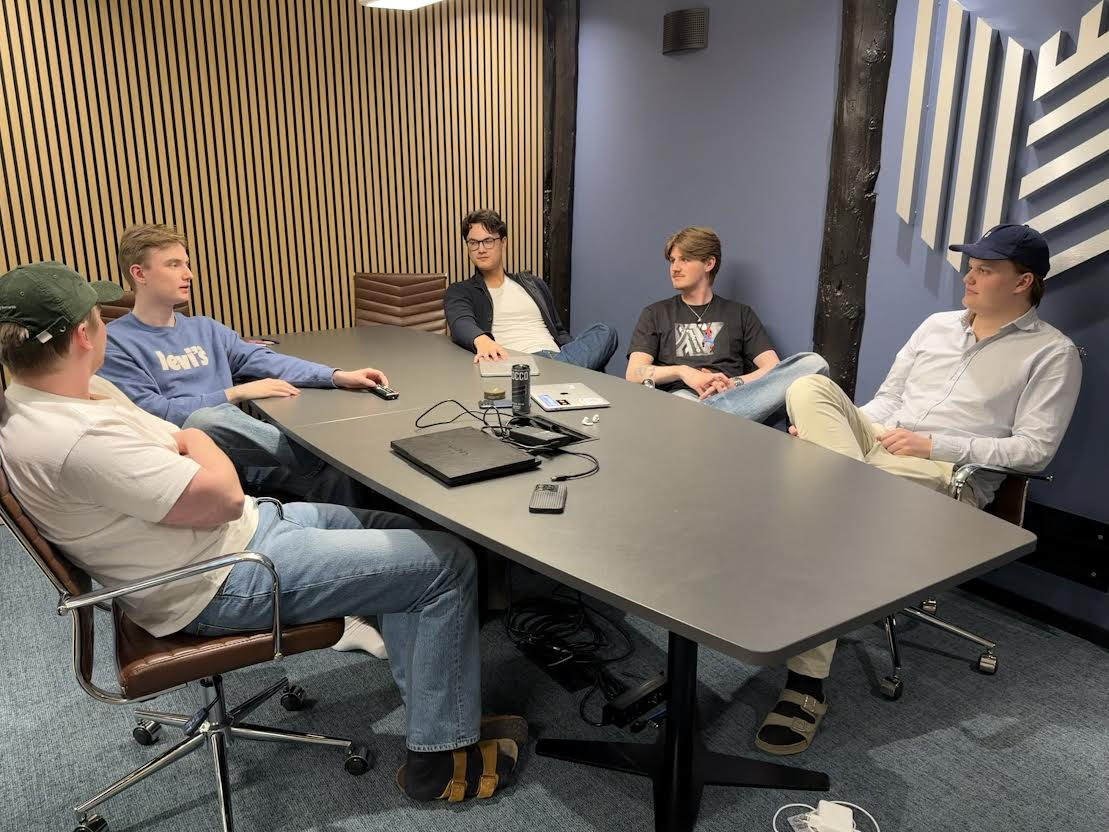
Next week Blockchain Sweden will release a new industry report on how the Swedish blockchain industry is doing in 2025. Before the update arrives, it is useful to recall the main findings of the 2024 report — which described an industry with strong assumptions but demanding framework conditions in the domestic market.

The 2024 report starts with the foundations: Sweden has historically been early adopters of new technologies, with examples such as Spotify, Klarna and Ericsson. The country has high digital maturity, well-developed infrastructure and a large base of qualified technical manpower. For blockchain players, this means relatively easy access to expertise and the ability to build on existing fintech and IT environments.
The report also points out that MiCA gives Swedish companies access to the entire EU market from a Swedish license, and that the country's tradition of consumer protection and compliance can be a strength as blockchain moves into more regulated segments. At the same time, the blockchain market itself is described as “small but with significant potential” — especially if the technology is connected to areas where Sweden is already strong, such as finance, gaming and sustainability.
When the companies in the report consider the business climate, a more mixed picture is drawn. Access to expertise and the relationship with most public authorities are highlighted as positive factors. Establishing a company is relatively easy, and the dialogue with some agencies — particularly the Tax Administration — is described as professional and solution-oriented.
The biggest problems are linked to banks and parts of the financial sector. Several players report significant challenges in putting in place basic banking services and insurance, even when the business is regulated and aligned with MiCA. In addition, many point to a distinct gap between its aspirations to be a technology nation and how little concrete blockchain technology is addressed in policy and strategy. The overall assessment of the report is that the climate rather more towards “demanding” than “favourable” for blockchain companies that will build and scale from Sweden.
One of the most striking findings of the 2024 report is the combination of optimism and uncertainty. Many companies describe the future outlook as “cautiously positive” or “full speed ahead” for their own business. They see that technology is maturing, that regulation is beginning to fall more into place, and that dialogue with other industries is slowly but surely becoming more concrete.
At the same time, 84 percent of the companies surveyed have considered moving their business out of Sweden. Among the companies with a turnover of more than NOK 1 million, only one had not considered such a move. The justifications range from bank access and uncertainty around regulations to the security situation of people associated with crypto and digital assets. The overarching question, therefore, is not whether blockchain has a future — but about where that future will be realized.
The report also devotes space to describing how misunderstandings affect the climate around blockchain. Many policy makers and sections of the public still link the technology directly to speculative crypto, crime, and high energy consumption. The companies surveyed point out that this narrative, combined with a high level of trust in government and oversight, makes it more difficult to gain traction for serious projects — even when these are regulated and compliance-driven.
In the interviews, several people call for a clearer position from Sweden as a state: whether the country wants to take an active role in developing and testing blockchain solutions, or whether it chooses to stand more on the sidelines while other jurisdictions move faster. For the industry, it is both about predictability and about signals to banks, investors and international partners.
Despite the challenges, respondents in the 2024 report point to several areas where they believe Sweden has good opportunities. Two areas are particularly highlighted: tokenization of real world assets and gaming. In the RWA track, it's about leveraging a stable economy, a mature real estate market and strong traditions of regulated asset management to test new, more digital ownership models.
On the gaming side, the argument builds on the fact that Sweden already has a gaming industry that accounts for significant export revenues. Here, many imagine that Web3 mechanisms — digital ownership, collectibles, new user and revenue models — can be connected without having to “reinvent everything”. In addition, financial services, logistics and brand/loyalty programs, among others, are mentioned as fields where blockchain technology may gain increasing importance over time.
With this as a starting point, some questions become natural when Blockchain Sweden now presents an updated industry report for 2025: whether the assessment of the business climate has changed, whether the dialogue with banks and financial institutions looks different, and whether MiCA has in practice provided more predictability for Swedish players.
At least as interesting is whether we see more concrete projects in gaming, RWA and other sectors that have made the leap from pilot to operational — and if so, whether that is reflected in how the industry considers its own future in Sweden. It is these lines that the new industry report can help us follow further when it is put forward at the launch event on March 10.
You have read what you can read for free. With an account you get unlimited access to all news and articles on kaupr.io — and become part of the network of investors, professionals and builders following onchain finance.