Martin Leinweber of index provider MarketVector expects bitcoin to find its bottom later this year, possibly between US$50,000 and US$60,000. He believes the four-year cycle still holds and recommends broad baskets for ETP investors.
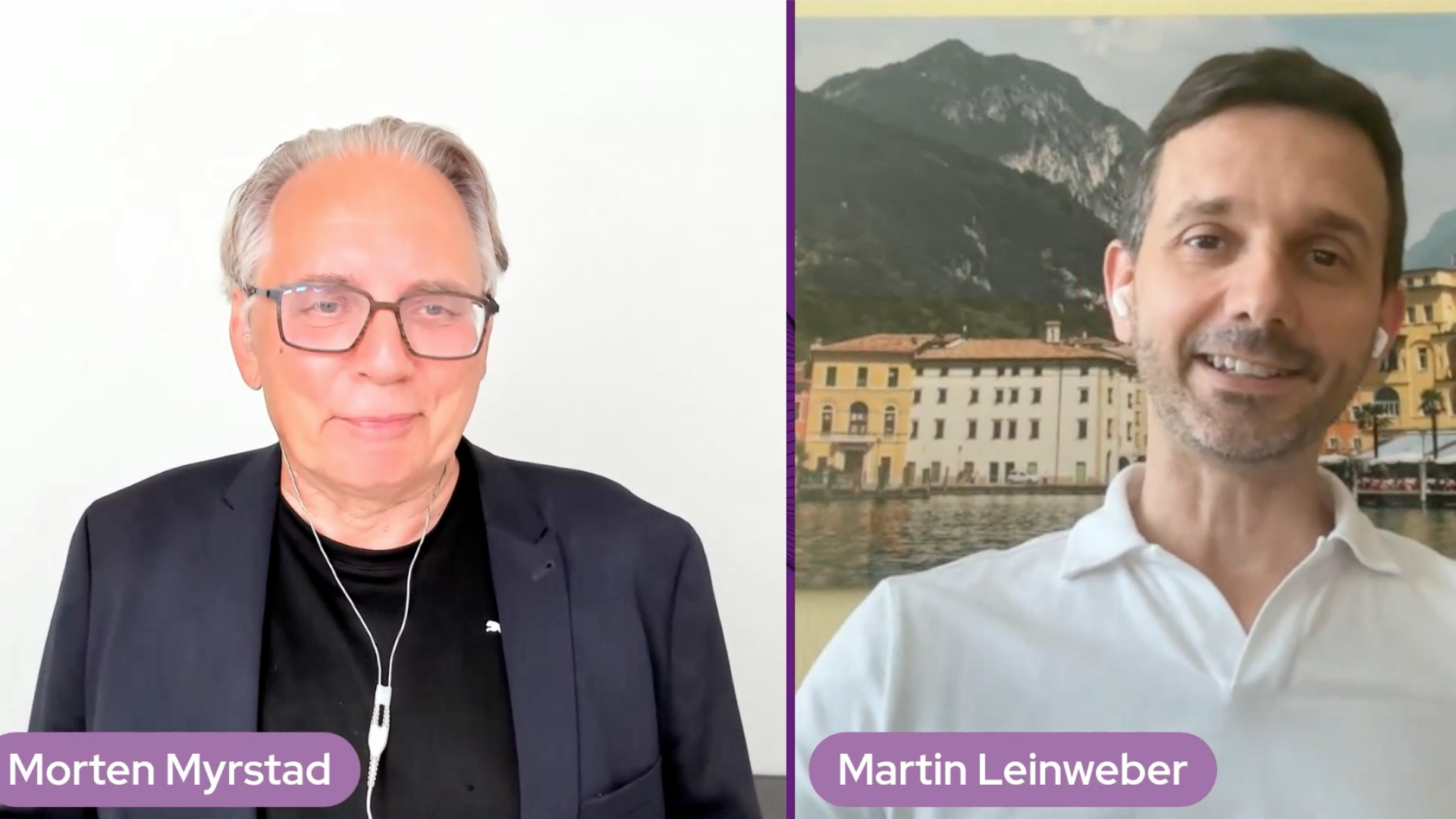
Photo: Martin Leinweber is head of digital assets research and strategy at MarketVector Indexes.
Leinweber said this during Kaupr's live event State of ETFs and Digital Assets in the Nordics on 30 June.
MarketVector Indexes is an index provider regulated under the EU Benchmarks Regulation. It produces indexes across all asset classes, with a particular focus on crypto since 2017, and also builds thematic indexes that blend stocks and crypto for US ETF issuers. Its indexes serve as the basis for exchange-traded products. Leinweber is also co-author of a book on bitcoin.
Leinweber sees a strong backdrop for crypto, with Wall Street moving in and regulation becoming clearer. Even so, the market structure tells a more cyclical story.
"A market bottom is a process, not a single news event," he says.
Each leg down in the bitcoin price has been smaller than the last, which he reads as selling pressure running out. Daily buying is defending the level around US$60,000. But he has yet to see the big capitulation, the heavy selling volume on the monthly charts that usually marks the bottom. He expects that later in the third quarter or in the fourth.
Many have argued that bitcoin's four-year cycle disappeared once ETFs and institutional investors entered the market. Leinweber believes the charts still show the classic pattern, measured from low to low or high to high, rather than from the halvings of new bitcoin supply.
He sees a final washout in a weak summer, with a bottom somewhere between US$50,000 and US$60,000.
"That would fit the four-year cycle perfectly. It is my working hypothesis, and we will see if it plays out," he says.
Bitcoin does not trade in a vacuum, but is closely tied to the macro picture. In US midterm election years, the S&P 500 has tended to move sideways from June to August, perhaps into October, and Leinweber believes bitcoin is caught in the same turbulence. Meanwhile, a lot of capital is parked in stablecoins, cryptocurrencies pegged to the dollar.
Interest is now focused on artificial intelligence, which Leinweber believes is priced to perfection. If the big cloud providers slow their investment, or competition emerges from China in chip production, the money could quickly move to other sectors.
He is therefore watching software stocks closely, because they are highly correlated with crypto. The software sector appears to have bottomed, and if the rotation comes, there is a good chance bitcoin and crypto will recover too, he says.
Strategy, formerly MicroStrategy, has under Michael Saylor bought bitcoin for its balance sheet and funded the purchases through the capital markets. Leinweber does not believe the model will blow up, but argues it has lost its engine.
The model relied on the shares trading at a clear premium to the value of the bitcoin holdings, allowing the company to issue new shares and buy more bitcoin. That premium is now effectively gone, according to Leinweber. He points to a new framework from Strategy with a ring-fenced cash reserve for preferred dividends, a higher 12 per cent dividend on the Stretch preferred shares, and authorisation for buybacks, funded if necessary by selling bitcoin.
"The engine that made this company special has effectively been switched off. What is left is liability management. This is no longer a growth plan, but a plan to keep the lights on until the premium comes back," he says.
According to Leinweber, the preferred shares cost Strategy almost US$2 billion a year. He argues investors should ask whether they need the company at all: if they want bitcoin, they can buy an ETF, and if they want leverage, they can buy options on the ETF.
For ETP investors, it comes down to risk management and exposure, and Leinweber believes prices are now attractive. He thinks the last cycle was dominated by bitcoin, while the next will be driven more by other cryptocurrencies, as tokenisation, stablecoins and payments between AI agents create more use cases than bitcoin as a store of value.
"If you are not very experienced in this market, why not just buy the top five or top ten, or broader baskets, and set and forget? Don't overcomplicate things," he says.
He recommends regular monthly saving, as Nordnet offers for exchange-traded crypto products [SETT INN LENKE til Nordnet-saken], and a fixed allocation, whether 1, 2 or 5 per cent, rebalanced regularly.
Many only see that cryptocurrencies other than bitcoin have underperformed it. But more than a handful have done better, Leinweber points out.
He highlights decentralised exchanges for perpetual futures, which use their revenue to buy back or burn their own tokens, so that token holders share in the success. The largest of them, Hyperliquid, has outperformed bitcoin by more than 120 per cent over the past twelve months, according to Leinweber, while Tron, which is widely used for stablecoins, has outperformed by more than 60 per cent. Privacy coins Zcash and Monero have also made a comeback.
Leinweber believes investors should look for tokens that outperform bitcoin in a falling market, because they have good odds of also doing well in the next cycle.
Blockchains where banks and funds can transact without everything being visible to everyone remain a narrow niche, but Leinweber points to Canton Network as promising. The network is built around privacy, and many financial institutions already use it.
"It is not about secrecy, it is about compliant privacy," he says. A bank or a hedge fund can transact confidentially, while the regulator can gain access when needed.
He also sees a use case for networks that hide the logic of smart contracts, so that a proprietary model, for example, is not left open on the blockchain. He considers this a theme for the next cycle.
On 30 June, Kaupr broadcast a live midyear review of the Nordic market for exchange-traded crypto products on LinkedIn, YouTube and kaupr.io. Nine speakers from issuers, index providers, an exchange, trading platforms and wealth management reviewed the first half of 2026 and the outlook for the rest of the year. The broadcast looked at the market from the perspective of retail investors as well as private banking clients, wealth managers, family offices and institutional investors.
Morten Myrstad of Kaupr hosted the broadcast, and the event was supported by K33, Coinmotion, Tyr Markets and The Mint. The full broadcast and the other interviews are on the landing page for State of ETFs and Digital Assets in the Nordics.
Sources: MarketVector Indexes, Kaupr
You have read what you can read for free. With an account you get unlimited access to all news and articles on kaupr.io — and become part of the network of investors, professionals and builders following onchain finance.