

Kriptomat founder Dejan Davidović describes three years building a compliant business and preparing its MiCA application. The application was filed last autumn, but met a process he calls long and drawn-out. The company withdrew and shut down.
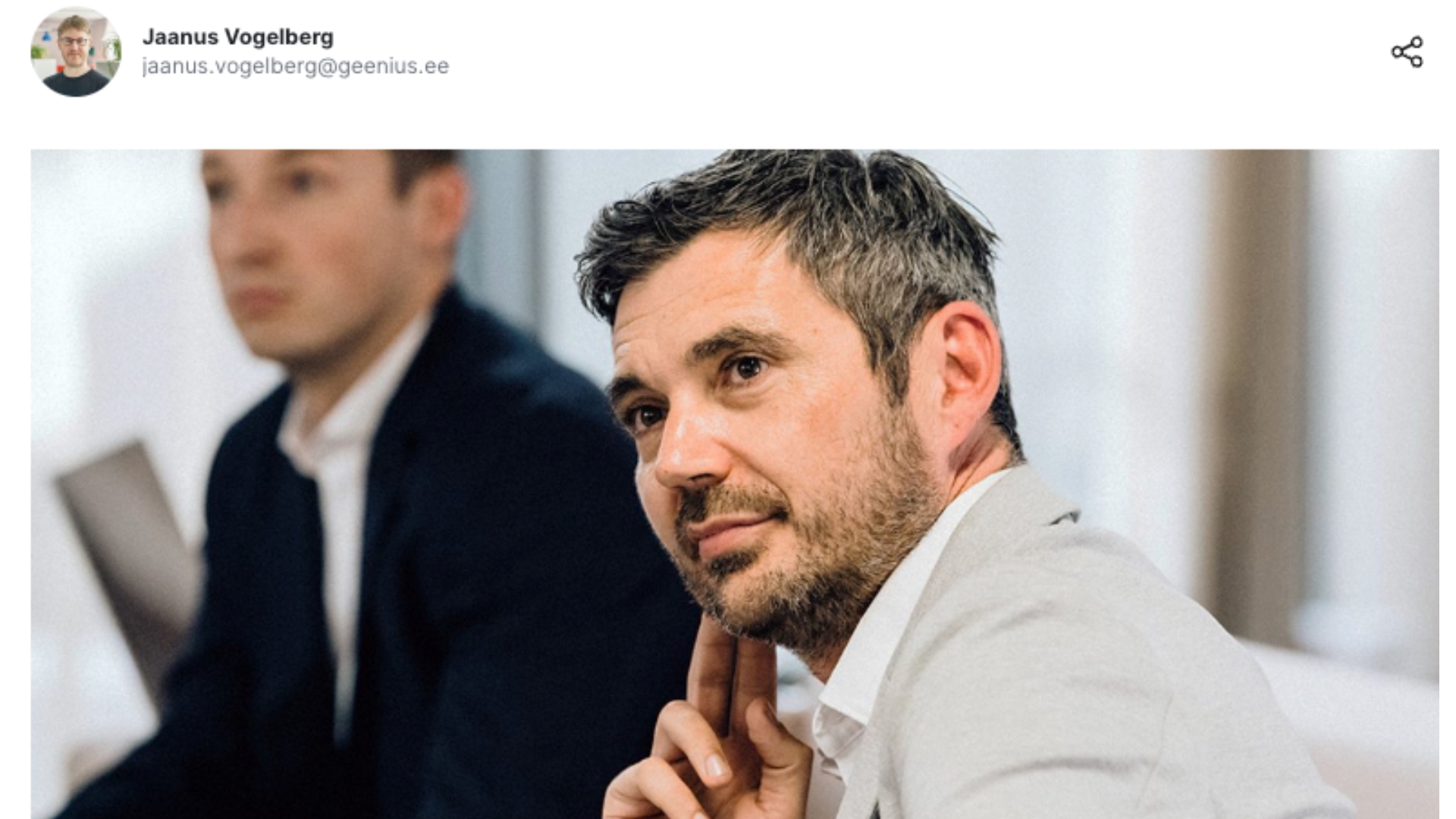
In mid-June, it became known that Kriptomat, an Estonian crypto company that at its peak had 120 employees, would wind down operations — without waiting for the Estonian financial supervisory authority's final decision on Kriptomat's MiCA license application. In an interview with DigiPRO, founder Dejan Davidović now describes a years-long fight to become MiCA-licensed, but also his frustration at being met with an unpredictable Estonian regulator throughout the formal application process since September last year.
"I'm still a big fan of Estonia and intend to keep doing business here, but I'll avoid regulated industries."
— Dejan Davidović, founder of Kriptomat
Kriptomat was founded in 2018 and grew from an experiment into a crypto platform serving customers across most of Europe, operating under an Estonian anti-money-laundering license for virtual asset service providers (VASPs). When supervisory responsibility passed to Finantsinspektsioon under MiCA, it triggered a process Davidović describes as long-winded and at times arbitrary — one that ultimately cost the company both its license and part of its workforce.
"We started in 2018, and it grew from an experiment into a real business. We were part of the startup ecosystem," says Davidović. At its peak, the Tallinn-based company had 120 employees, with staff also in Slovenia, France, Spain and elsewhere in Europe.
Davidović himself moved to Tallinn, got an apartment and a residence permit. "Estonia is also a lot like my home country, Slovenia — a strange language nobody speaks," he jokes.
According to Davidović, the regulator's main objection was that Kriptomat's board members weren't deemed "fit and proper." Several had to be replaced along the way.
"Some had been there since September, but suddenly they no longer suited the financial supervisory authority. That meant we had to look for new people," he says. Even though Kriptomat had a good reputation and candidates lined up, there was no guarantee the next round of board members would be approved.
According to Davidović, Kriptomat spent three years building a compliant business and preparing for the formal process of applying for a MiCA license from Estonian authorities. The actual application to Finantsinspektsioon, however, wasn't filed until September last year.
"As a founder, you try to make plans. The last year and a half, it was very hard to plan, because we didn't know when we could submit the application, when we could talk to the new regulator, or when the process would be complete," says Davidović.
The hope was for a decision early in the year, but Finantsinspektsioon's leadership changed along the way. According to Davidović, the company was initially hit with hundreds of questions — a number that gradually shrank, until a decision was signaled for early May.
Davidović points to what he sees as conflicting signals from the state: the e-residency program and Startup Estonia try to attract capital and talent, while it's practically impossible for e-residents to open a bank account.
He believes none of Estonia's current crypto companies will survive and get licensed, citing the company Change — which ended up seeking a license in the Netherlands instead — as an example. Aside from Lightyear and Wallester, he says almost no players in the sector have truly succeeded in Estonia. "It's a shame Estonia doesn't get to be part of the innovation," he says.
Despite the long, demanding process, Davidović says he holds no grudge. Both he and co-founder Srđan Mahmutović have registered new, ordinary companies in Estonia — in business consulting and IT, respectively.
"If you're a builder and want to build, it's frustrating to have constant regulations holding you back," he says. Kriptomat has set 2028 as its deadline for fully winding down and settling accounts with remaining customers.
Get unlimited access to news articles and a Nordic community via Kaupr Member (free membership)
Sources: DigiPRO
You have read what you can read for free. With an account you get unlimited access to all news and articles on kaupr.io — and become part of the network of investors, professionals and builders following onchain finance.

