

With veteran hedge fund manager Russell Thompson as its new Chief Investment Officer and three strategic acquisitions in twelve months, Swedish Hilbert Group is in the middle of what its leadership calls Hilbert 2.0.
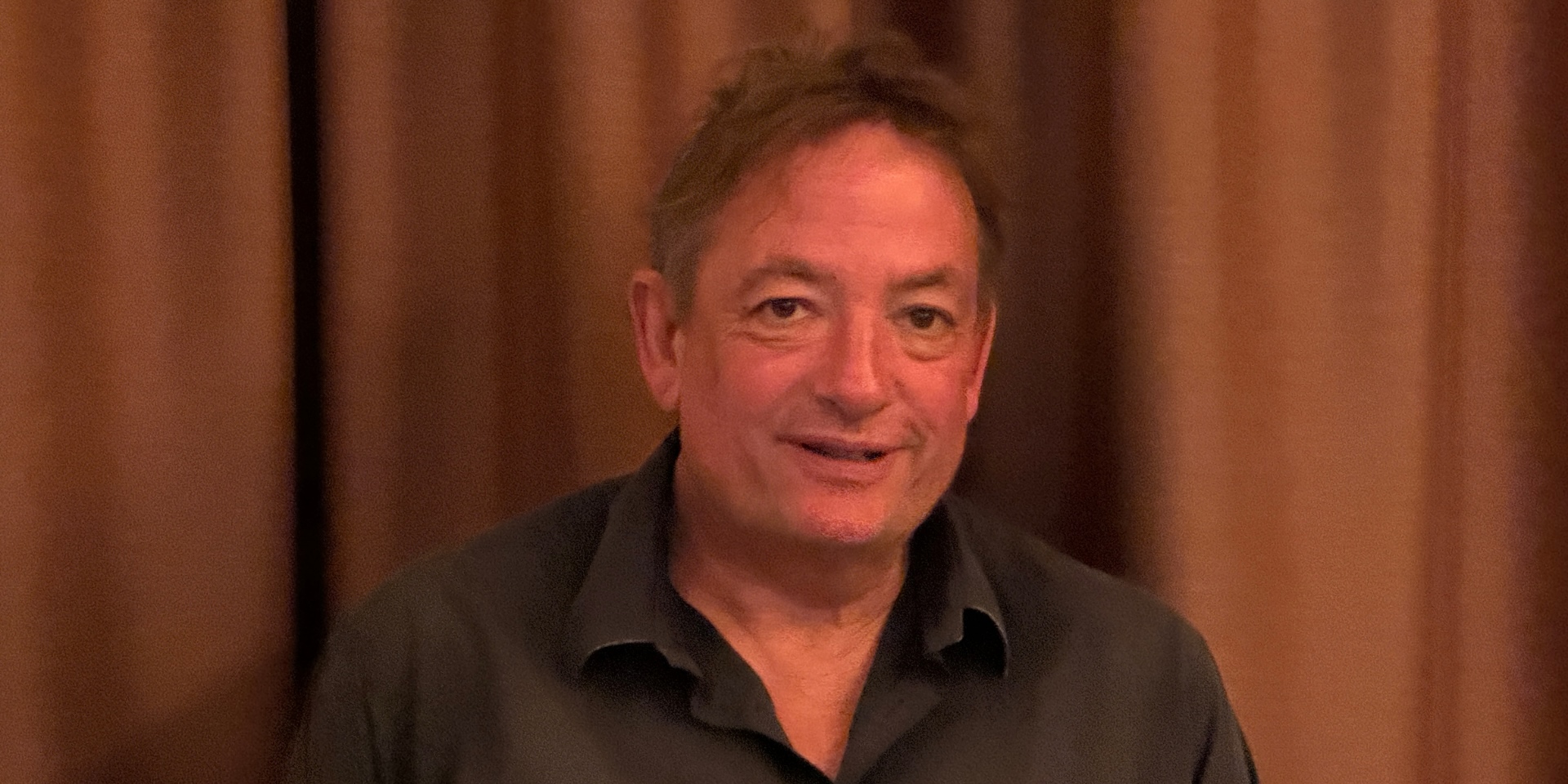
Kaupr met Thompson in Stockholm, between engagements. What he describes is not merely an adjustment — it is a new company with greater institutional weight, stronger leadership and higher velocity. Thompson is keen to draw a clear line between Hilbert and companies that accumulate Bitcoin on their own balance sheet in hope of price appreciation. Hilbert runs active, quantitative asset management on behalf of investors. And his mandate is not to drive the company's share price.
«The stock will take care of itself. My job is to manage risk and generate alpha. That's it.»— Russell Thompson, CIO, Hilbert Group
Hilbert has traded on Nasdaq First North since 2021, but the listing only began to pay institutional dividends after the recent leadership changes and acquisition rounds. As a listed company in one of Europe's most attractive capital markets, Hilbert is subject to audit (PwC) and quarterly reporting — a level of transparency and governance that opens doors with large investors where private players cannot follow.
Thompson offers a pointed example: one of the world's largest sovereign wealth funds — which he had spent 17 years trying to reach through his previous firm, Cambridge — agreed to begin a six-month due diligence process with Hilbert precisely because of its listed status. That fund is now an investor.
Thompson's first assessment of Hilbert, when he met founders Niclas Sandström and Magnus Holm — both PhDs in physics — in Monaco in the summer of 2024, was blunt: "It was a car crash." The products had extreme volatility, no scalability, and the algorithms traded almost exclusively in altcoins — a segment Thompson describes as populated by unserious projects that are difficult to scale in a trading context.
What he did find was infrastructure worth keeping. Hilbert had already completed the regulatory compliance, operational capacity, and legal framework required to pass institutional scrutiny. Thompson had spent years building exactly that at Cambridge. At Hilbert, he did not have to build it again.
In March 2025, Thompson's own firm, Liberty Road Capital, was folded into Hilbert, bringing market-neutral strategies and five years of experience in AI-driven trading and crypto derivatives. In September 2025, Hilbert acquired Nordark, the Swedish crypto banking platform Nordfinex Holding, paid in shares. In December 2025 came the acquisition of Enigma Nordic — a high-frequency trading platform with a trading volume exceeding 50 billion Swedish kronor in 2025 and a Sharpe ratio above 3.0. The purchase price was up to $32 million, partly in shares and partly as a performance-contingent earn-out.
Alongside the acquisitions, Hilbert was developing a platform called Synthetikea, aimed at Bitcoin holders who do not want to sell or move their assets off-chain. Through Synthetikea, users can swap Bitcoin for an hBTC token — a Hilbert-denominated representation of Bitcoin — and receive returns based on the company's daily trading results. The Bitcoin remains in custody and is never sold.
Thompson sees this as access to a large and as yet untapped pool of passive Bitcoin that will never move through traditional financial channels.
Hilbert's shareholder base reflects a split: Swedish retail investors dominate on the retail side, while institutional owners are largely Norwegian — family offices and high-net-worth individuals. Thompson describes arriving at a meeting in Norway expecting a couple of analysts, and walking into an auditorium with 40 people present and another 40 on video.
Tensions between the two groups surfaced in autumn 2025, when Thompson publicly signalled his intention to buy Hilbert shares worth around 25 million Swedish kronor. The purchase was slow to materialise, and Swedish retail shareholders took notice. The explanation was that Hilbert had entered an insider lock-up period related to the Enigma acquisition — Thompson held material non-public information and could not trade. He ultimately purchased approximately $2 million worth of shares, but the episode illustrated a persistent communication challenge: retail shareholders monitor insider trading lists closely and read every signal.
Swedish banks have been among the most restrictive in Europe toward crypto-related businesses, Thompson notes, which partly explains why Hilbert has relied predominantly on US-based service providers. Norway has proven more receptive — both among institutional investors and regulators.
The company reports a pipeline of over $300 million in active due diligence as of early March. To reach its stated target of $10 billion in assets under management, Hilbert needs to enter the US capital market and attract both shareholders and investors from there. The European market alone is not large enough, Thompson argues — making no secret of the fact that his ambition is modelled on what he built with Cambridge.
You have read what you can read for free. With an account you get unlimited access to all news and articles on kaupr.io — and become part of the network of investors, professionals and builders following onchain finance.