
In an interview with Kaupr, Blockchain Sweden's Secretary General Pehr Granfalk warns that Sweden risks falling behind in blockchain development — and calls for better framework conditions, more use cases and a clearer distinction between technology and crypto.
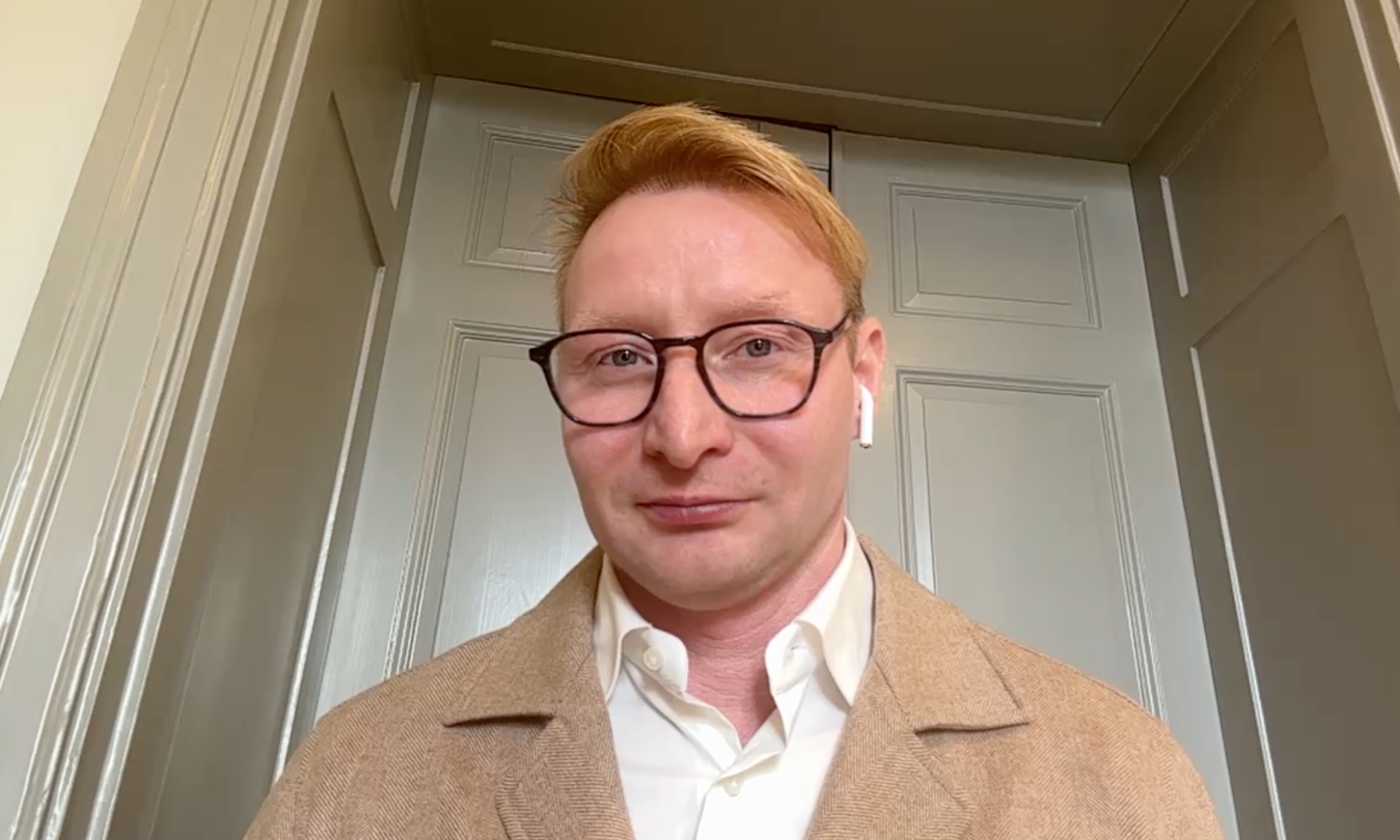
In this interview, Kaupr meets Pehr Granfalk, Secretary General of Blockchain Sweden, who explains why the industry organization was started, what the situation for Swedish blockchain companies looks like today, and what needs to be put in place to prevent Sweden from falling behind.
Granfalk has a long political background, including as council chairman of a larger Swedish municipality, and today also works extensively in Brussels on issues related to blockchains and regulation.
Blockchain Sweden was established just over a year ago after Granfalk and several companies met with the Minister of Financial Markets ahead of the introduction of the MICA regulations. In the dialogue, it became clear that the industry needed one common voice, rather than individual actors seeking out politicians separately. The organization was therefore created as an industry association and interlocutor for companies working with blockchains.
A recurring theme in the interview is that Blockchain Sweden positions itself as a technology organization, not a “crypto association”. The name “Blockchain Sweden” is deliberately chosen; the term crypto is perceived as too narrow, while DLT becomes too technical and narrow. Granfalk stresses that anyone working on the technology — from crypto exchanges to DLT developers and advisors — can be members, but that the core of the organization is technological development, not cryptocurrency trading.
Shortly after its launch, Blockchain Sweden conducted a survey of the business climate for Swedish blockchain companies. They conducted 10—15 in-depth interviews and supplemented with 40—50 surveys among companies in and around the industry. The result shows that on paper Sweden has good prerequisites as a technology nation, with curiosity about new technologies, but that the picture for blockchain companies does not reflect this.
Granfalk clearly describes resistance and skepticism from both banks and governments, strongly related to the fact that blockchains are often equated with cryptocurrency. Moreover, during the period when the investigation was done, there were several robberies targeting people affiliated with crypto exchanges, which contributed to more negative attention. Overall, this produces a weak business climate, with many entrepreneurs considering moving their business out of the country.
In the interview, it is highlighted that the industry is already strictly regulated, stinging at odds with the image of a “wild west”. Granfalk says that more than 60 percent of the time in some companies goes to compliance and compliance with regulations. He sees it as positive that the industry is now covered by a clearer regulatory framework, in line with other financial institutions, but at the same time points out that the administrative burden is heavy.
The conversation also touches on the fact that crypto adoption per capita is lower in Sweden than in the rest of the Nordic countries. Granfalk believes that more crypto users do not automatically provide a better business climate for blockchain companies, but that the Swedish skepticism towards cryptocurrency is likely spilling over to technology companies that build on blockchains. At the same time, increased institutional investment in products based on bitcoin and other assets could help bridge the gap against the traditional financial system.
Granfalk describes how Blockchain Sweden wants to be a natural interlocutor for governments, legislators and politicians. The organisation has responded to hearings, including on DAC8, held meetings with the Swedish Tax Agency and other authorities, and organised a seminar in the Riksdag on what the blockchain industry can contribute. They also conduct more traditional influence and information work, with personal contacts and debate posts, but tone down the crypto-focused message in favor of technology and use cases.
A key part of the strategy going forward is to highlight concrete Swedish examples of blockchain use. Today, the discussion is often theoretical -- everyone talks about traceability, digital identities and verification -- but few actual cases are visible in the public eye. Granfalk will therefore find and showcase projects where the technology is already used, for example in the healthcare sector or for document verification, in order to make its usefulness more understandable.
Towards the end of the interview, Granfalk reflects on the link between blockchains and artificial intelligence. He uses the internet as a comparison: early on it was associated with guns, drugs and porn, but today is basic infrastructure. Similarly, he envisions blockchains becoming everyday technology, especially in combination with KI's ability to copy and create content. Blockchains can then play an important role in verifying the identity and ownership of digital assets.
By the time the interview was done, Blockchain Sweden had grown from around 11 to about 15—16 members in a short period of time. The membership range from crypto exchanges to companies developing other blockchain-based services, as well as advisory and law firms. In the future, Granfalk will continue to intensify its efforts against the authorities, increase media visibility and more clearly articulate what is needed to strengthen the business climate — with the goal that Blockchain Sweden will be the natural interlocutor in issues affecting blockchain in Sweden.
00:00 Welcome Pehr Granfalk
00:55 What is Blockchain Sweden?
02:01 Why Blockchain as a name?
03:05 Survey on the industry
05:16 What blockchain can contribute
06:34 Sweden as an innovative nation
07:18 What could MiCA come to mean?
08:19 Sweden and crypto adaptation
09.15 The blockchain and classical finance
10:23 Activities of the trade association
11:24 From Skepticism to Dialogue
12:42 Actual use and use cases
14:48 Blockchain and Artificial Intelligence
15:39 Membership growth of 40 per cent
16:45 Increased visibility and government contact
You have read what you can read for free. With an account you get unlimited access to all news and articles on kaupr.io — and become part of the network of investors, professionals and builders following onchain finance.

