

AMC chief executive Adam Aron wants Robinhood to halt trading in tokens tracking AMC shares, arguing the structure circumvents US securities law. Robinhood rejects the demand and stands behind the product.
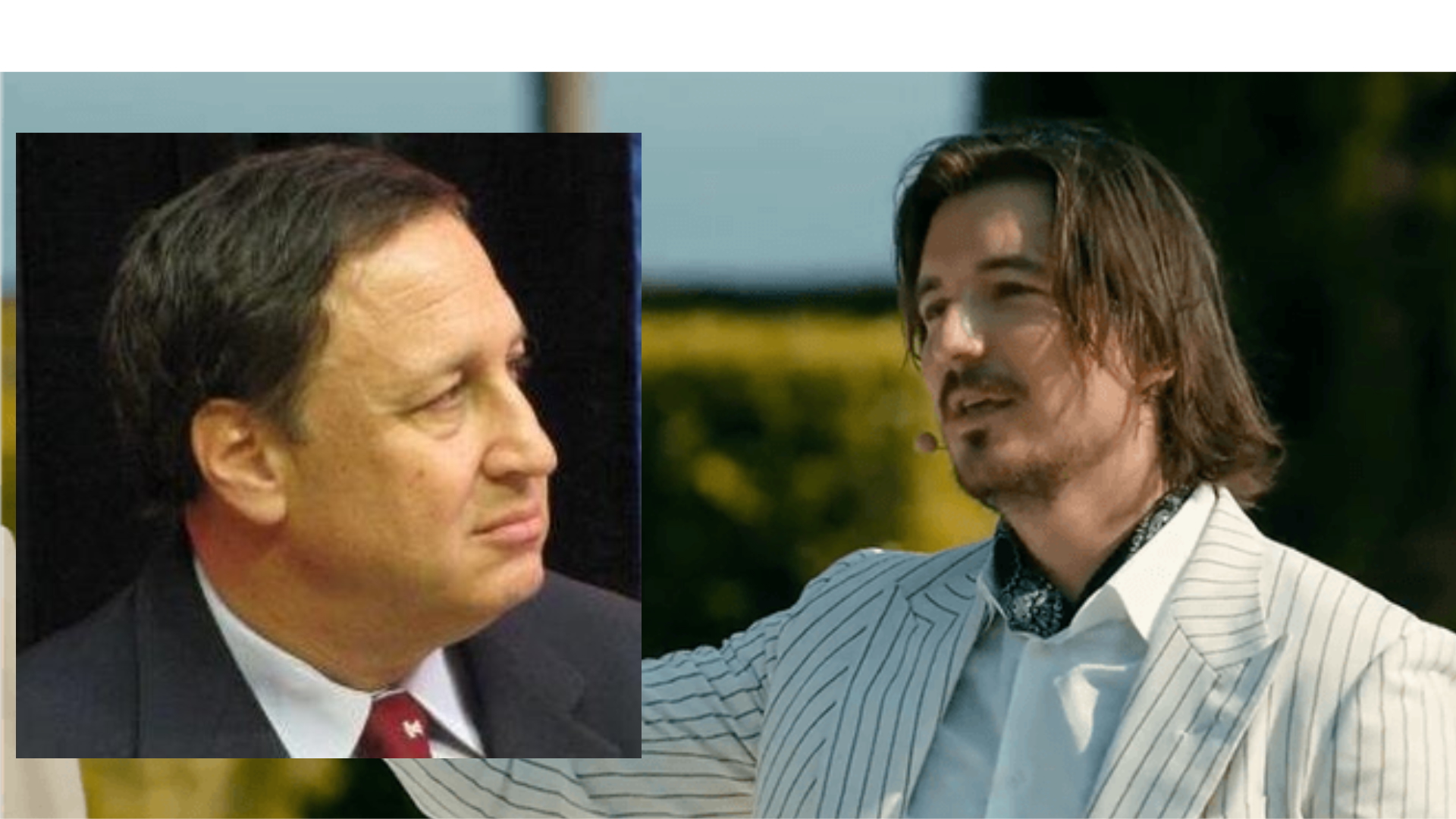
Adam Aron (left) wants Robinhood to halt trading in tokens tracking AMC shares. Vlad Tenev (right) refuses. The photograph of Tenev is from Cannes in the summer of 2025, when Robinhood launched tokenised stocks. Montage: Kaupr
Adam Aron, chief executive and chairman of the US cinema chain AMC Entertainment, went after Robinhood on X on Thursday 3 September. At issue are the brokerage's stock tokens — blockchain-based contracts that track the price of listed shares without giving the buyer any ownership of the company. One of them tracks AMC stock, with no involvement from AMC. Robinhood rejects the demand to stop and maintains that the product sits within the rules. The entire exchange has played out in public on X.
In his first post, Aron called the practice contemptible, outrageous, disgusting, detestable, inexcusable and vile, and asked how it could possibly be legal.
"We have no connection to this at all, and do not condone it in any way," he wrote, adding that outside securities counsel would look into the matter immediately.
He pointed to Robinhood's own disclosures stating that the tokens are not registered under US securities law and may not be offered, sold or delivered in the United States or to US persons. Sales are also restricted in Canada, the United Kingdom and Switzerland, among others. The issuer is Robinhood Assets (Jersey) Limited, a private company registered in Jersey. According to Aron, the arrangement covers AMC and more than 190 other companies.
Robinhood chief executive Vlad Tenev replied briefly: "What's the concern?" Aron came back with a longer list, starting with the point that US securities law exists to protect investors, and that AMC spends millions of dollars every year complying with it.
"In good conscience, how can Robinhood as a U.S. company set up an operation in far offshore Jersey, an island 3000 miles away, and market a security sort of posing as AMC in some shape or fashion, and not comply with U.S. securities laws. That is shocking and shameful," Aron wrote.
His objections are both corporate and principled. A synthetic equity market decouples ownership of the tokens from a company's ability to control its own capital raising, he argues, and where share ownership carries rights such as the vote, the tokens carry none — whatever the disclosures say. The quasi-fake market in Jersey sows distrust in financial markets generally, he wrote, and distrust in financial institutions is already high.
Then came the demand: he called on Robinhood to voluntarily halt trading in the AMC tokens. If it does not, counsel has been asked to assess whether AMC can force it to stop. Aron also said the company would take the question to the US Securities and Exchange Commission. In a later post he explained that "CEASE AND DECIST" in capitals was an attempt at humour, a cross between desist and de-cyst, and asked why Robinhood promotes the tokens on its US website when they cannot be sold to US persons.
Robinhood rejects the demand, and said so on X as well. Dan Gallagher, Chief Legal, Compliance and Corporate Affairs Officer at Robinhood, wrote that the company knows a thing or two about US securities law and will not "DECIST", adding that Aron can send his lawyers over and they will be educated. Tenev shared the post with the comment that the company stands behind Stock Tokens.
On Friday, Tenev posted a broader defence of tokenisation on X without naming Aron. Everyone should be able to access high-quality financial assets wherever they live, he argued, and that is what tokenisation unlocks: taking the best of US capital markets and making them available globally. The industry is still small compared with global finance, he wrote, but the advantages are becoming harder to ignore.
Traditional market infrastructure was built around fixed hours, closed networks and layers of intermediaries, and was never designed for round-the-clock execution, programmable assets, composability or self-custody. Investors' needs have moved faster than the infrastructure beneath them, he wrote.
"What gives me confidence is seeing how many different people are now pushing this industry forward. Founders are building new products, LPs are bringing liquidity, traders are finding new uses, and infrastructure teams are making the whole thing work," Tenev wrote, adding that it will take time for the old guard to come on board, and that this is worth fighting for.
A month earlier he had said tokenised stocks could eventually carry the full rights of traditional shares, and urged US regulators to modernise the rules quickly.
Robinhood runs two variants. Classic Stock Tokens are derivative contracts giving economic exposure to US stocks and exchange-traded products. Robinhood owns the underlying assets itself and holds them through a US-licensed institution, and the contracts are offered in Europe under MiFID II. The European platform lists more than 2,000 such tokens, with trading around the clock from Monday to Friday.
The second variant is transferable stock tokens in ERC-20 format, tokenised debt securities issued by the Jersey entity. They provide exposure to the underlying security but no legal or beneficial rights against the company that issued the shares. This is the structure the dispute is about.
Robinhood moved the effort further onchain in July, when it launched Robinhood Chain, an Ethereum Layer 2 network built on Arbitrum technology. The network opened with 95 tokenised equities and trading through Robinhood Wallet in more than 120 countries. Combined trading volume for tokenised stocks through Uniswap on the network reached one billion dollars in August, according to Uniswap founder Hayden Adams.
The market reacted immediately. AMC stock rose as much as 21 per cent to $3.07 before falling back to a gain of about six per cent at $2.69 on Friday morning, according to Bloomberg. Robinhood stock fell about three per cent to $121.30, after a 33 per cent rise over the previous month.
Others in the industry have weighed in on Aron's side. Adviser Ross Gerber called the tokens fake securities and compared them to a Ponzi scheme. Archax chief executive Graham Rodford argued that a tokenised stock should mean the stock, tokenised. Securitize chief executive Carlos Domingo pointed to one AMC-linked trading pair on Robinhood Chain that traded at roughly 60 times AMC's actual share price, the result of thin liquidity and limited arbitrage.
Aron is not the first chief executive to reject a Robinhood product carrying his company's name. In July 2025, OpenAI stated that tokens tied to the company were not OpenAI equity, that it had not partnered with Robinhood, and that it had not approved any transfer of shares. Tenev said at the time that the tokens were not technically equity but derivatives giving retail investors exposure to the private company through a special-purpose vehicle. He also argued that tokenisation should not require consent from the company being tokenised.
The difference now is that AMC is listed, closely followed by retail investors and familiar from the meme-stock wave. The market for tokenised stocks has meanwhile grown from around $2.5 billion at the start of the year to $13.4 billion as of 1 September, according to The Block's data.
AMC has not announced litigation, but has put its lawyers on the matter and will raise it with the SEC. Robinhood has said it will not halt anything. The two companies agree on one point: the tokens are not shares. The disagreement is over what they are instead, and who gets to decide.
Sources: Adam Aron, Vlad Tenev, Dan Gallagher, Robinhood, The Block, Benzinga, crypto.news, Startup Fortune
You have read what you can read for free. With an account you get unlimited access to all news and articles on kaupr.io — and become part of the network of investors, professionals and builders following onchain finance.