

Often described as “the new kid on the block” in the market for tokenized assets, 21x is creating a fully digital, on‑chain infrastructure for regulated securities – what CEO Max Heinzle describes as “the Spotify moment for capital markets”
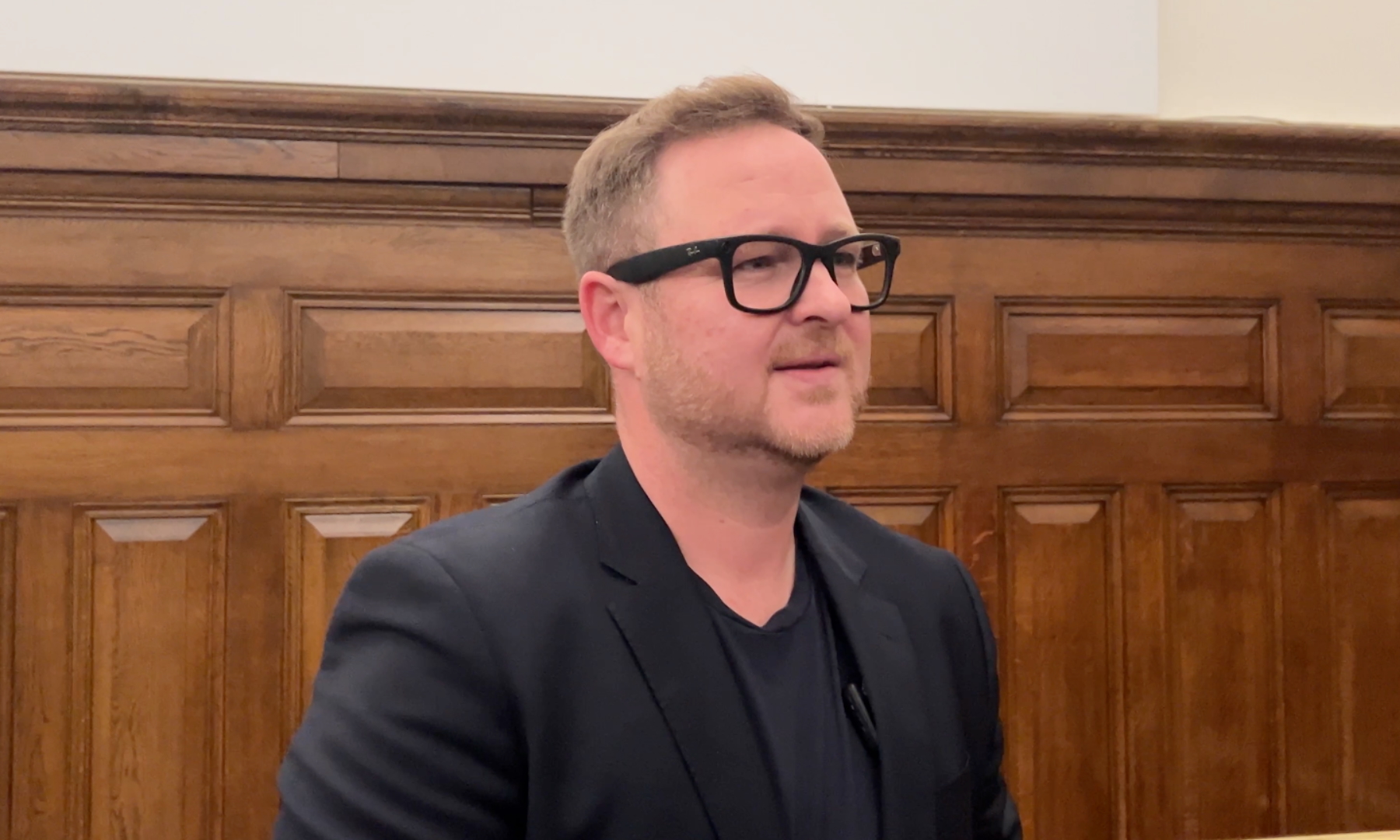
In a video interview recorded last autumn, co‑founder and CEO Max Heinzle explains how the company became the first regulated DLT market operator under the EU’s pilot regime for distributed ledger technology (DLT).
Heinzle describes how 21x sees real-time, on‑chain settlement as a structural shift for capital markets, how Europe and the US are choosing different regulatory paths, and why the company is focusing on tokenised securities rather than competing directly with established exchanges. He calls what's happening now with asset tokenization the “Spotify moment for capital markets,” drawing parallels to how digital music changed distribution and access. Today's standardized settlement cycles, such as T+1 or T+2 in public markets -- and even slower processes in private markets -- are set up against 21x its goal of near real-time settlement of one to two seconds on the chain.
Heinzle describes 21x as the first DLT market operator in the EU licensed under the bloc's DLT pilot regime, which was introduced to enable regulated experiments with blockchain-based market infrastructure. The company was licensed as a DLT trading and settlement system (TSS) after around two and a half years of preparation and about a year and a half of licensing process, before launching what he refers to as a decentralized market infrastructure. The platform brings together the issuance, primary distribution, secondary trading and settlement of financial instruments on a public blockchain, where matching, trading and settlement take place on‑chain.
According to Heinzle, the infrastructure is built to support stablecoins, tokenized cash and tokenized assets, including securities issued under the DLT‑pilot regime. That means 21x can handle DLT‑based financial instruments such as stocks, bonds and fund structures in a regulated environment that targets security tokens, rather than unregulated crypto assets. He did not rule out that cryptocurrencies and other digital assets could be used for settlement or trading in the future, but stresses that the focus is now on stablecoins, which have a clearer framework in Europe.
The interview also touches on how regulation is evolving differently in Europe and the United States. Europe has made an early exit with MiCA and the DLT pilot regime, providing players like 21x with a regulated sandbox for tokenized markets. At the same time, Heinzle points to new initiatives in the United States, including legislation to facilitate stablecoins, and a different approach to digital central bank money at the Federal Reserve than at the European Central Bank and Bank of England.
Heinzle believes the US model relies more heavily on flexible exemptions and targeted easing approved by regulators, while Europe has established a separate pilot regime with detailed rules for blockchain‑based market infrastructure. Going forward, Heinzle expects the United States to move quickly and thus reduce the lead Europe has had. To prevent Europe from falling behind, he believes clear actions are needed — including making the DLT pilot regime permanent and addressing constraints such as volume caps, product restrictions and time limits.
Asked whether traditional and digital assets will in the long term be traded on the same platforms, Heinzle is cautious. He does not see it as appropriate for traditional securities to be traded at 21x, pointing out that there are already large and established market infrastructure players for this segment. Entering these markets would involve competing directly in a mature and scale-driven landscape, rather than building new market structure.
21x is therefore clearly positioning itself against tokenized securities. Heinzle acknowledges that the transition will take time, particularly given the volumes handled by market players such as DTCC and Euroclear, and believes the pace will ultimately be determined by regulation and policy decisions. For investors, the gains from tokenization are likely to be felt in the form of easier access and faster settlement, while the underlying blockchain remains largely invisible as long as the user experience is simple and intuitive.
In parallel with the rollout in Europe, 21x has also taken steps to formalise its venture in the US. The company plans a unit in Delaware, headquartered in New York, with the goal of providing a regulated, blockchain-based marketplace for digital financial instruments to U.S. institutional and professional investors. Heinzle describes this as a natural next step after securing the first DLT market operator license in Europe, and as an opportunity to enter into dialogue with US regulators at a stage where there is a growing willingness to test new market models. The ambition is to contribute to an emerging landscape of interconnected on‑chain capital markets that can operate across regions, while being rooted in local regulatory frameworks.
00:00 — Intro: “Spotify moment of capital markets”
01:10 — How 21x became a regulated DLT market operator in Europe
04:00 — Primary and secondary markets on chain: what actually runs on blockchain
07:00 — Stablecoins, tokenized cash and regulated securities
10:00 — Why settlement moves from T+2 to seconds
13:00 — Europe's MiCA and DLT pilot vs the US approach
17:00 — Why 21x focuses on tokenized markets, not traditional venues
20:00 — US expansion and vision for interconnected on‑chain markets
You have read what you can read for free. With an account you get unlimited access to all news and articles on kaupr.io — and become part of the network of investors, professionals and builders following onchain finance.