

In a blog post, Secretary General of Blockchain Sweden, Pehr Granfalk, goes straight into the hottest regulatory debate in European crypto: who should oversee the market. Building on the proposal to give ESMA direct oversight of all crypto service providers in the EU, he shows how today's fragmented practices create uncertainty, higher costs and poorer conditions for serious players. Granfalk argues that a more unified European model is a prerequisite for fair competition, higher innovation rates and stronger digital competitiveness for Sweden and Europe.
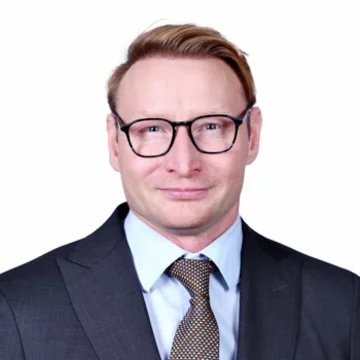
Secretary General of Blockchain Sweden. Extensive experience in politics, the public sector, and strategic leadership, including serving as Chair of the Municipal Executive Committee in Solna and holding assignments in the EU’s Committee of the Regions. Currently working in the EU on the Digital Omnibus and the AI Act, with a focus on simplifying regulations. Member of Blockchain for Europe’s Advisory Council.
The post has also been published in Dagens Industri in a different version.
In an industry where decentralized solutions are the guiding principle, we suddenly see an opportunity in centralization. A centralisation that provides Swedish and other European companies with clear rules, predictable processes and a level playing field. We will not achieve this through 27 national supervisory cultures, but through a common European model that strengthens both competition and the pace of innovation.
The European Commission has put forward a comprehensive reform package for Europe's financial markets, the Market Integration Package (MIP). This is the biggest change of financial market supervision in over a decade and Sweden should actively support the Commission's line.
The most significant change concerns the crypto market. The Commission is proposing that the European Securities and Markets Authority (ESMA) should be given direct oversight of all crypto service providers (CASPs) in the EU. This represents a clear upgrade from the current model, where each Member State itself analyses, interprets and applies MICA regulations.
The commission's rationale is simple. The European capital market is currently fragmented, with major differences in national supervision, technical expertise, regulation and risk assessment. According to the commission, this leads to fragmentation, obstacles to cross-border capital flows and increased costs for businesses. This is particularly evident in the crypto space, where 27 national interpretations of an advanced, digital and borderless regulatory framework make the market less efficient and less competitive.
During the autumn, Blockchain Sweden has analysed how MiCA is practiced in different member states. The photo confirms the Commission's situational description. In several countries, companies receive ongoing dialogue, case management in English and support from specialized MICA teams in supervisory authorities. In Sweden, the process is more limited, less predictable and significantly more costly. This leaves Swedish companies competing against other EU players on an uneven playing field.
At the same time, it is important to see that the reform work of the European Commission is not only about supervision, but about laying the foundations for a modern and competitive European financial and industrial structure. A key part of the MIP proposal is therefore to build out and scale up the so-called DLT pilot, in which banks and market players get to test trading, clearing and settlement with blockchain-based infrastructure. Today, the pilot is severely limited in both scope and volume.
The Commission will now open it up to more players and larger transactions — a clear sign that the EU sees the blockchain as a strategic arena for the future. If Europe is to strengthen its technological and industrial competitiveness, the Union must seriously start developing, testing and implementing blockchain-based solutions on a large scale. Sweden is not a leader here today, which is why it is even more important that we actively support the EU's ambition to build a modern digital market infrastructure.
It is worth noting that decentralized technology such as blockchains is not opposed to centralized supervision. On the contrary, a common European supervisory model can provide real equal treatment for innovation and growth. When companies are assessed according to the same criteria, in the same process, by an authority with specialized expertise, the risk of national biases that currently place Swedish companies at a disadvantage is reduced.
But Sweden, which does not have a large European financial metropolis, but on the other hand a growing and internationally oriented tech, fintech and Web3 sector, has everything to gain from a more unified and centralized EU model.
Sweden should therefore actively support the Commission's work in this area. Several Member States will safeguard their national supervisory models, particularly countries where the financial sector benefits from regulatory fragmentation. The government should work in the Council of Ministers to ensure that the proposal is not watered down, but becomes the reform Europe needs to strengthen its digital competitiveness.
Swedish companies deserve clear rules, predictable processes and a level playing field. We do not achieve this through 27 different supervisory cultures, but through a common European model that strengthens both competition and the pace of innovation.