
Swedish parties give broad backing to blockchain as a strategic technology and to its use in the public sector, but are consistently warier of Swedish stablecoins. All eight parliamentary parties answered the survey.
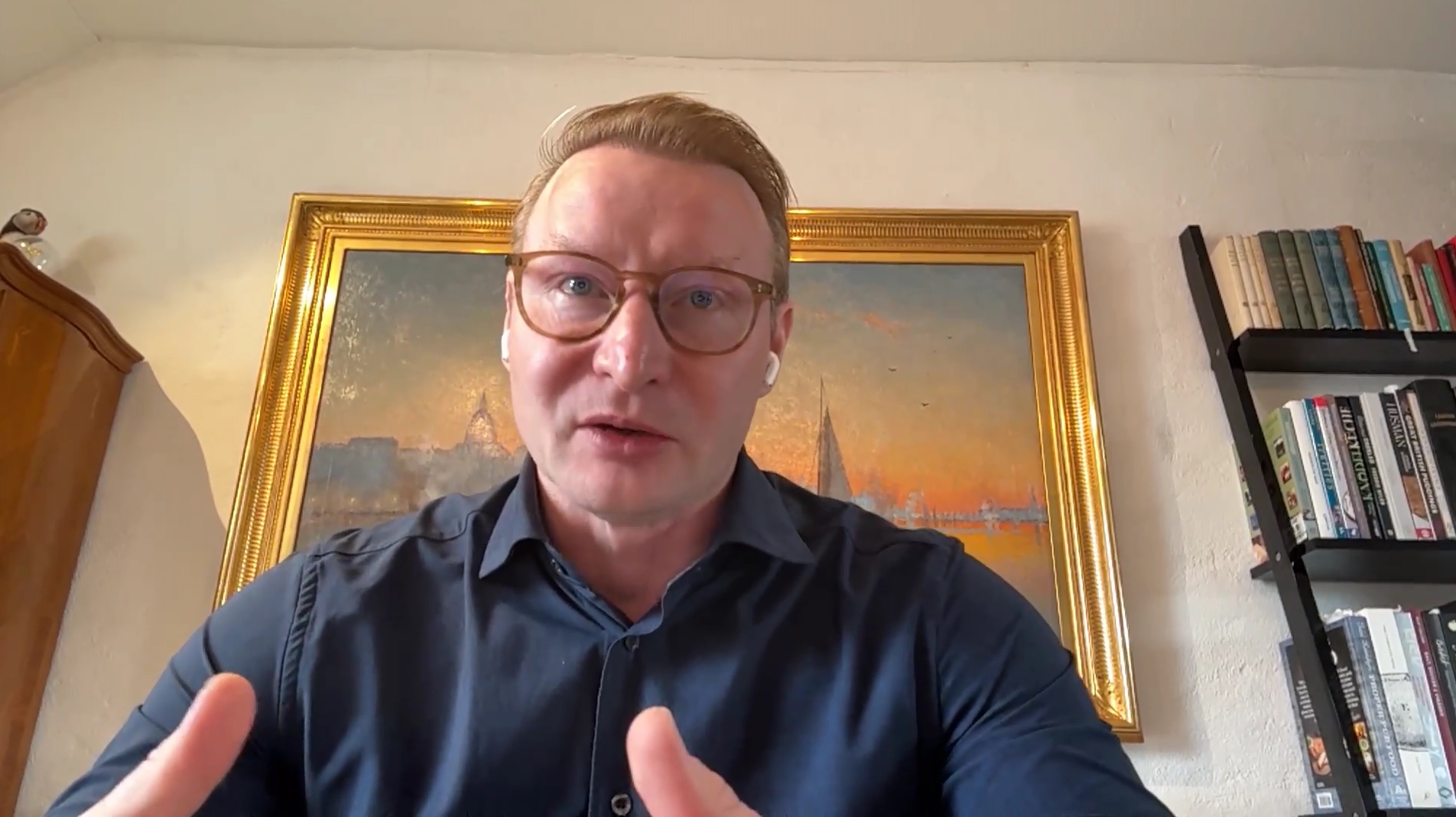
Pehr Granfalk is secretary general of Blockchain Sweden, which produced the survey.
The industry body Blockchain Sweden has put ten questions to Sweden's parliamentary parties in what it calls a valkompass, an election compass. The parties answered on a scale from one to ten, and all eight responded. The survey was carried out ahead of the parliamentary election on 13 September, but secretary general Pehr Granfalk does not see it as an election barometer. He suspects there may be a difference between positive answers before an election and the realities of everyday politics. He is therefore inviting the parties to share knowledge after the election, with the organisation asking what information, what knowledge and what proposals they themselves need in order to move forward.
Granfalk says there is no great discrepancy between what the parties consider important and what the industry itself considers important. He describes a fairly broad agreement that Sweden should look further at blockchain, from tax rules to tokenisation and use in the public sector.
That includes blockchain as a strategic technology. On whether Sweden should count it among the country's priority future technologies, and on whether authorities, regions and municipalities should more widely evaluate using it where it can create efficiency, security or transparency, the parties answer positively across the board.
The exception is stablecoins — cryptocurrency with its value tied to an ordinary currency. The question was whether it matters for Sweden's international competitiveness in digital trade and financial services that Swedish firms can develop and offer them. That is the question the parties agreed with least, Granfalk says.
He does not know whether that is because the question concerned Swedish firms rather than the Riksbank, or because the parties do not see it as important that the Swedish krona is used internationally.
"Our fear is that if there are no Swedish digital alternatives in the digital economy going forward, the Swedish krona becomes fairly obsolete," he tells Kaupr.
Granfalk argues the issue reaches well beyond the organisation's own members. Swedish companies operating abroad need to be able to use Swedish stablecoins, among other things for payments within groups across borders, in an economy he describes as strongly outward-facing.
The task is too large for Blockchain Sweden alone. The organisation wants to bring together banks, business and other players that will depend on such infrastructure. He describes it as an education exercise that has to be done among politicians, authorities and business.
Where stablecoins fell flat, the surprise came on tax. Support for simplifying the tax rules for crypto-assets was far stronger than Granfalk had expected, including from parties that otherwise have no objection to complicated tax rules.
The problem he describes is practical. A young person using crypto-assets in a game can make tens of thousands of transactions in a single session, and with AI tools it can run to hundreds of transactions a minute. Declaring each individual transaction is effectively impossible.
Blockchain Sweden therefore wants to work up a proposal taxing the entire holding at 30 per cent, as in a Swedish investment savings account (ISK). Granfalk says they have not yet settled on how the model should work, but that the support makes it worth attempting, including with the tax authority.
The question that separates the parties most is whether supervision under MiCA should move to EU level or stay in Sweden. Granfalk says the answers largely track the parties' general view of the EU: the more centralist want it moved, the more nationally oriented want it kept.
Blockchain Sweden itself believes supervision should be centralised. The reasoning is that Finansinspektionen, in the organisation's assessment, applies a stricter standard than its counterparts in other EU countries, and that Swedish companies would be better served by a single supervisory authority for MiCA across Europe rather than one per country.
Granfalk had also hoped for full support for Swedish authorities taking a more advisory and supportive role in implementing MiCA, alongside the traditional supervisory role. Many parties agree, but not entirely, and the experience of member companies shows there is a great deal to do here, he says.
Many parties also answer that tokenisation — representing assets as digital units on a blockchain — is something Sweden should pursue. Granfalk points out that a Swedish public inquiry into tokenisation and how it could be done in Sweden already exists, and argues it should be straightforward to take it up again and use what can be used.
He notes at the same time that tokenising real-world assets runs into each country having its own securities legislation. The combination of positive answers on a regulatory sandbox and on tokenisation is why he wants to take the next step with politicians after the election, and he mentions an incubator as one way of testing solutions in practice.
Granfalk does not think the parties have fully grasped everything they answered, and suggests some may have asked an AI model what the questions meant before filling them in. That they attempted an answer at all, rather than simply scoring high to pick up marginal voters, he considers a workable starting point.
Challenged on what the placements say about bloc politics — the Moderates and the Left Party sit side by side on several questions, while the Sweden Democrats, the Centre Party and the Social Democrats sit highest — he answers that it says more about the responsibility of governing. Those closer to the middle have, in his assessment, kept their options more open.
"We can tell the parties that you agreed with us that this was an important issue before the election. How can we help you turn that into political action?" he says.
The organisation has had dialogue with several members of parliament during the term, and has also reviewed who has shown concrete engagement on these issues. He highlights Rickard Nordin of the Centre Party, David Perez of the Sweden Democrats, who has tabled a proposal for a bitcoin reserve together with several colleagues, and Oliver Rosengren of the Moderates, who invited Blockchain Sweden to a seminar in parliament. Financial markets minister Niklas Wykman attended the organisation's annual meeting.
Sources: Blockchain Sweden, Kaupr
Get unlimited access to news articles and a Nordic community via Kaupr Member (free membership)
You have read what you can read for free. With an account you get unlimited access to all news and articles on kaupr.io — and become part of the network of investors, professionals and builders following onchain finance.

