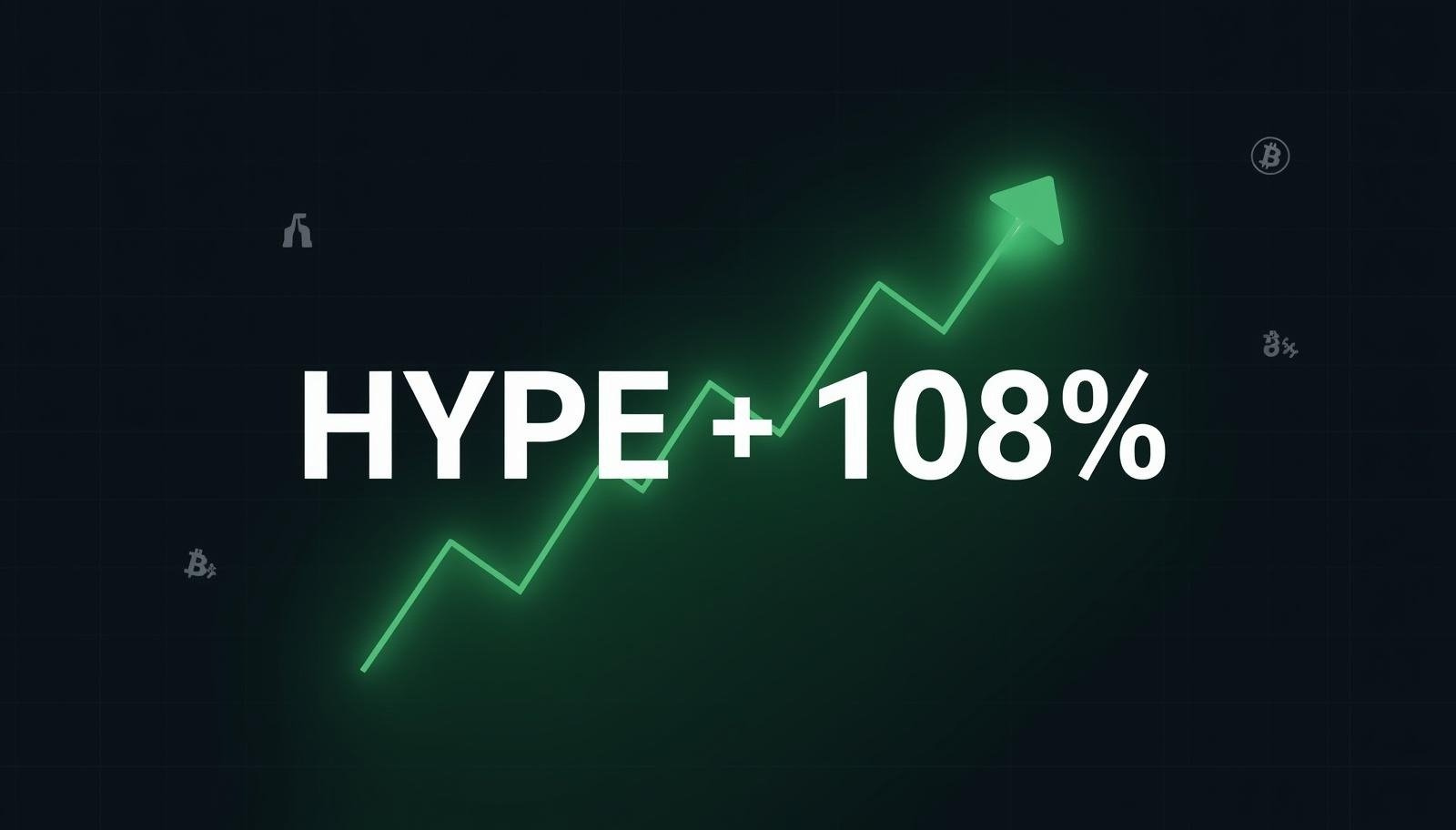
HYPE is up 108 percent since January. Kaupr took a closer look at what is driving the rally — and the answer points to a Saturday in February when the world was at war and the markets were closed.
Hyperliquid is a decentralised exchange that never closes. There is no clearing house, no trading hours and no single actor who can halt trading. Those qualities proved decisive on that Saturday in February when conventional markets were unavailable.
When the US and Israel bombed Iran, investors looking to trade on the news had one practical option: Hyperliquid.
In the days following the strike, oil futures volume on Hyperliquid surged from $339 million to $7.3 billion. WTI crude oil alone accounted for $840 million in 24-hour volume and was the third most traded market on the entire exchange. Brent Crude followed in fifth place with $360 million over the same period.
Oil is now the second most traded product on the platform, behind only Bitcoin. Silver and S&P 500 futures are trading actively, with growth of 40 percent week over week. RWA trading is up 800 percent since the start of the year and has surpassed $2.3 billion in open interest.
The technical foundation for the expansion is the protocol upgrade HIP-3, which allows anyone to create new markets on the platform without permission from a central authority.
More trading automatically means a higher HYPE price — it is built into the system. The platform directs 97 percent of all revenue toward buying back and permanently burning HYPE tokens. More trading generates higher revenue, higher revenue drives larger buybacks, and fewer tokens in circulation creates sustained upward pressure on the price.
HYPE traded around $21 in January and reached approximately $45 in April — a gain of 108 percent from the January low. The token is still trading 26 percent below its all-time high of $59, with the next resistance zone between $48 and $52.
You have read what you can read for free. With an account you get unlimited access to all news and articles on kaupr.io — and become part of the network of investors, professionals and builders following onchain finance.