

The team behind U-proof has won Blockathon in Stockholm. The solution lets those who receive aid take the photo that proves the help arrives, while a fingerprint of the photo is registered on the blockchain.
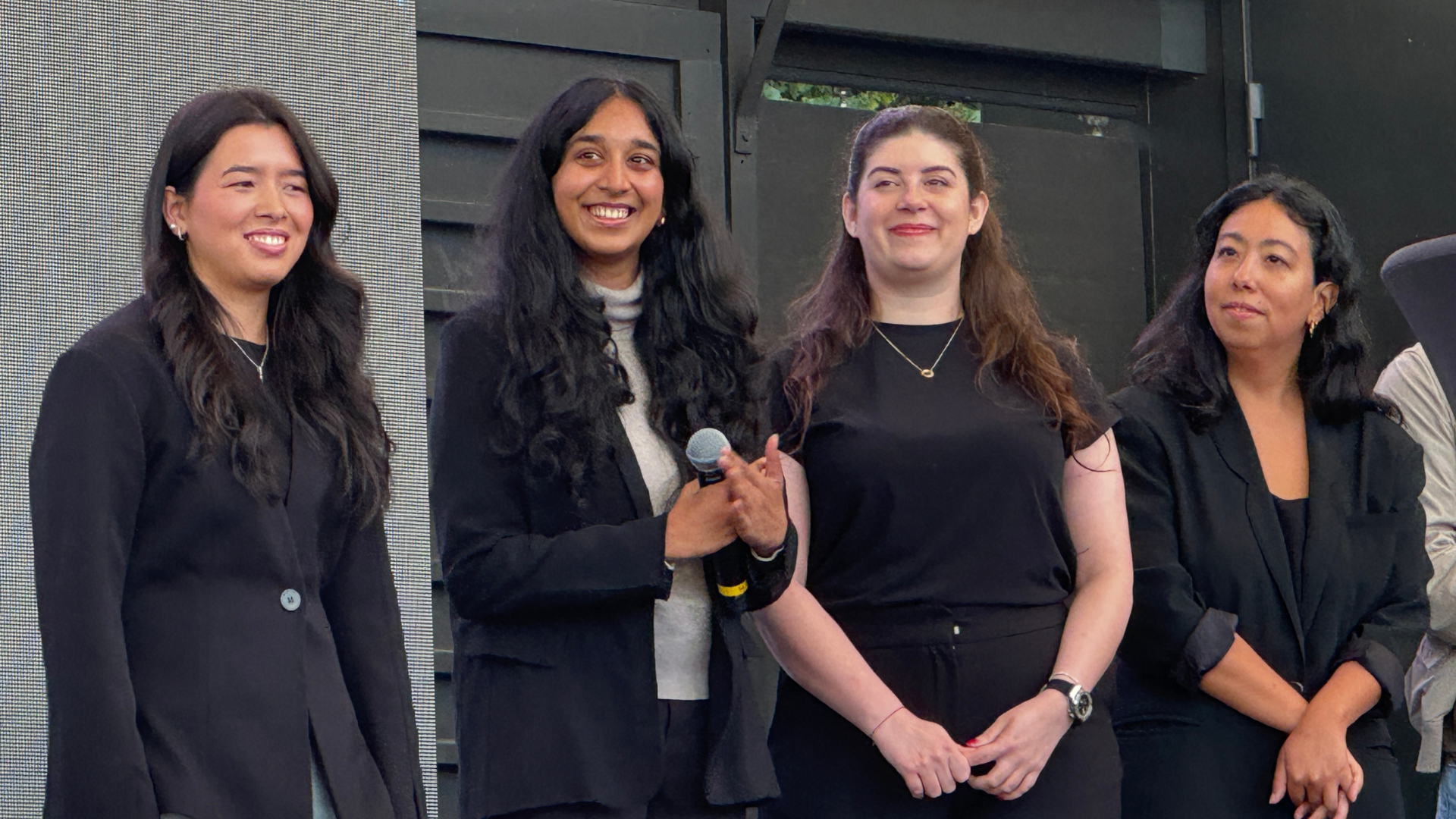
Photo: Hadisa Anwari, Ashita Kolla, Eylül Balcilar and Catalina Pizarro are behind the winning solution U-proof.
Three teams reached the final of Blockathon in Stockholm and presented their solutions at Demo Day in Kungsträdgården on Thursday. On Friday the team behind U-proof was named the winner and received SEK 10,000 in credit at Amazon Web Services. The team answered the problem statement from UNICEF and consists of Hadisa Anwari, Ashita Kolla, Eylül Balcilar and Catalina Pizarro.
The starting point was the problem statement Arun Maharajan of UNICEF set out on proof from the field. The team framed it as the organisation needing credible documentation that its programmes work, gathered directly where they are run.
The answer turned around who is to gather that documentation. The proof is to be supplied by citizens themselves, captured on site, and be possible to verify and trace afterwards.
The team demonstrated a mobile app running in the browser, where the user takes the photo with the camera inside the app itself. Location and time are attached automatically.
UNICEF reviews the submission before approving it. That leaves it to the organisation, not the sender alone, to decide what counts as valid documentation.
The photo itself stays in UNICEF's own database. What is registered on the Base blockchain is a digital fingerprint of the photo, together with area and time.
The split means the documentation can be checked afterwards without the photos themselves sitting in the open. The team gave the solution the tagline "Aid that's verified, every proof".
Where Arun Maharajan used toilets, solar panels and vaccinations as examples of what has to be documented, the team chose a nutrition programme for the demonstration. In the example, recipients photograph their meals.
What was shown is a prototype built over the course of the week, not a solution UNICEF has put into use.
When the team gave its thanks from the stage, Arun Maharajan was the first person they singled out. He was available to them throughout the week, and the team described that access as decisive in getting them over the line.
One of the members, a designer, said that spending the week on something of value to society was what made taking part meaningful to her.
The two other finalists answered problem statements from AIMS-Management and the Swedish Red Cross. Their solutions are covered in the article on the three Blockathon finalists in Stockholm.
Sources: FirstBlock-athon, U-proof, Kaupr
You have read what you can read for free. With an account you get unlimited access to all news and articles on kaupr.io — and become part of the network of investors, professionals and builders following onchain finance.

