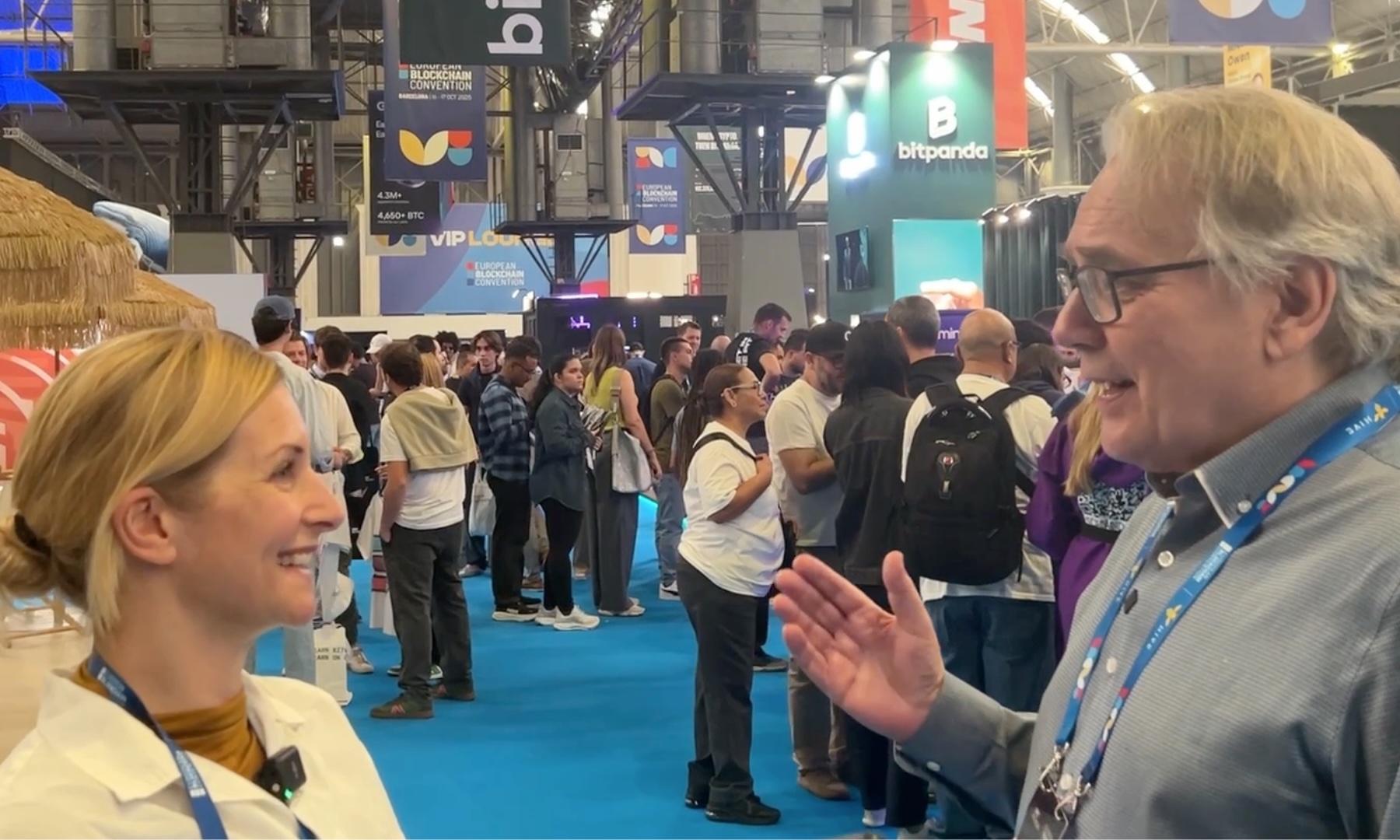
Backed by Sweden’s first MiCA licence, founder Frank Schuil is making a comeback as CEO of Safello, with a clear ambition to turn the company into the preferred partner for Swedish banks, asset managers and other financial institutions that want to enter crypto.
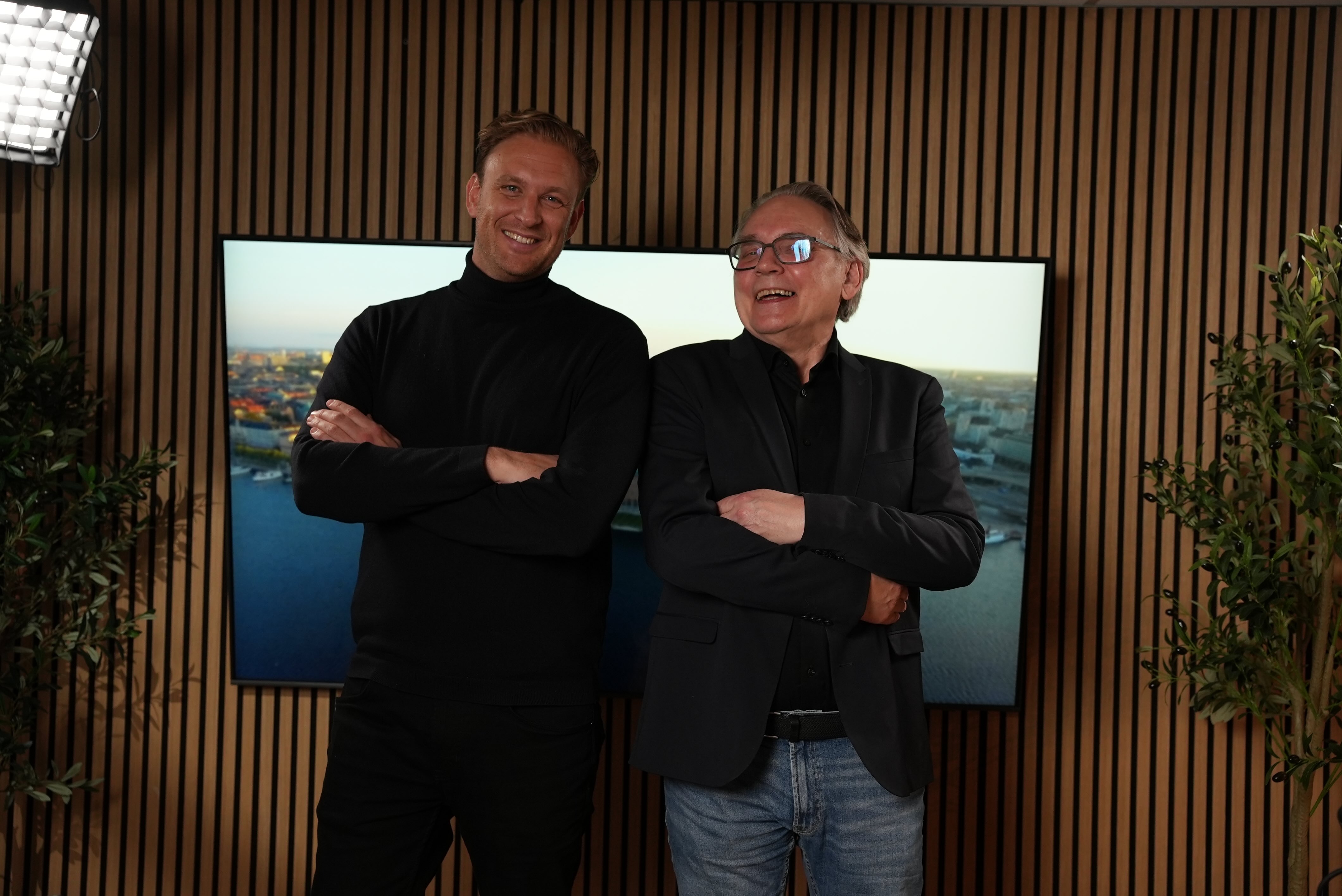
In an exclusive video interview with Kaupr, Schuil expands on Safello’s institutional strategy and the role he believes decentralised AI will play in the next phase of the crypto market.
Schuil argues that Safello’s position in its Swedish home market, combined with the MiCA licence, gives the company a distinct competitive edge – both against other Swedish crypto exchanges and against Nordic and global players looking to enter Sweden.At the same time, he has an equally clear ambition to highlight the opportunities in decentralised AI, which he sees as the next major trend in the crypto market after Bitcoin and Ethereum.
For Safello founder and current CEO Frank Schuil, returning to the top job is all about timing -- and getting back where he thrives best. After three years on the sidelines as chairman, focusing on MICA licensing, governance structure and regulatory clearinghouse, he now describes it this way: “Being back in the driver's seat gives me a lot of energy.”
In the interview, he says that he has sat down with many ideas, both culturally and practically, for how Safello can be developed further - and that being operational again makes it possible to put these ideas into practice. The retail platform comprises and still accounts for the bulk of revenues, but he sees the biggest growth opportunity in opening the door to banks and financial institutions within a clear European regulatory framework.
Schuil describes the institutional market as a harder nut to crack than retail, and especially in the Nordics, where both regulators and banks have long been wary of crypto. That is precisely why he believes that the domestic market advantage is crucial: Safello is currently the only operator with a Swedish MICA license, and also has deep roots in the local financial sector.
For institutions looking to enter crypto under a regulated framework, he highlights the combination of MICA license, local anchoring, and established infrastructure as factors that can lower the threshold for taking the first step.
At the same time, Schuil believes that the time has now come for financial institutions to change their stance. The legal objections to crypto are not the same as before, as long as one operates within a clearly regulated regime.
If a bank or institution doesn't have order in its own house or fears a supervisory visit, that's one thing. But where the books are in order, Schuil doesn't see any good legal argument for saying categorically no to crypto anymore. On the contrary, Safello is experiencing growing interest from institutions that actually want to enter the market -- and who are now looking for a way to do so.
From Safellos's point of view, the challenge is to get the puzzle resolved in a way that is consistent with both the MICA regime and the institutions' own risk and compliance requirements. It is this puzzle Schuil now says he spends much of his time solving in dialogue with selected financial institutions: how to make it practicable for banks and other players to offer crypto services, while leaving values in the home market and complying with regulations to the letter.
In the video interview, Schuil also looks at developments in crypto in recent years — from the US's “Operation Chokepoint 2.0” and the political backlash against the industry to how the MICA regime in Europe is changing the rules of the game for both exchanges and institutions. He also shares reflections on stablecoins, agentic AI and the role of the Nordic region in this new landscape, topics you can delve into through the timestamp overview below.
At Kaupr, we have followed Schuil over the past year, where we have seen him actively go out and talk about artificial intelligence and Bittensor — with great energy — both in interviews, reports and live broadcasts on X/Twitter. Through Safello Labs, the company has published in-depth analyses of decentralized AI, and among other things, Safello has switched part of its bitcoin holdings to TAO, the token of the BitTensor protocol, and launched a staked TAO-ETP in partnership with Deutsche Digital Assets.
Along the way, Safello has implemented AI strategies based on Bittensor, both in the form of investments, research and new products — such as the platform Wutao.app for tracking and trading between different Bittensor subnets. After a period in which he has largely fronted decentralized AI from the chairman position, he is clear that he can do more from an operational CEO chair than from the sidelines.
He believes that Bittensor combines several of the lessons learned from Bitcoin and Ethereum in one protocol, but with AI as the main use case. “At the core, it works: real things are happening on the protocol. That's what gets me excited. It's what we call the 'black swan event' of AI: nobody is really looking at it, certainly not the centralized players,” he says in the interview.
Where, then, does Schuil think Safello has developed under his new leadership in two or three years?
“Then I think we should be in a position where we've had the breakthrough on the institutional side. Dit is een modelo we can export across Europe met de MicA licentie. I also think we will have expanded our position in decentralized AI and taken a lead both on the platform side and on the ETP side.”
Toward the end of the conversation, Schuil sums up his own motivation with a smile:
“So far it's fun. I'm looking forward to shaking things up a bit.”
00:00 The founder's comeback story
01:42 The US as the dominant player
03:38 How will Europe and the Nordics act
04.56 Institutions becoming more important
06:38 Sceptical authorities and banks
07:52 Position and business strategy
08:39 Focus on decentralized AI
10:04 Evaluation of AI platforms
11:16 Energized by new opportunities
12:18 Bitcoin, Ethereum, and Bitensor
14:08 Uso casos de AI decentralizado
16:30 How can Safello do business on AI?
18:01 Have you lost interest in Bitcoin?
19:38 Market strength in Sweden
21:08 Ambitions for the next 2-3 years