
Two mobile Bitcoin data centers from Power Mining are now being shipped from Latvia to a city in Scandinavia, where they are connected directly to the municipal district heating system. Together, the two devices can produce up to 19.4 bitcoin a year and heat around 4,000 homes.
- We hope this is just the beginning — an opportunity to scale the model further and show how Bitcoin mining can strengthen local heating systems, reduce energy wastage and create real value for communities,” says Kristaps Mors, co-founder of Power Mining.
Established in 2017, Power Mining develops energy-efficient solutions and data centers for Bitcoin mining. The company's latest model is a portable data center built into a 20‑foot shipping container, making it easy to transport and install worldwide.
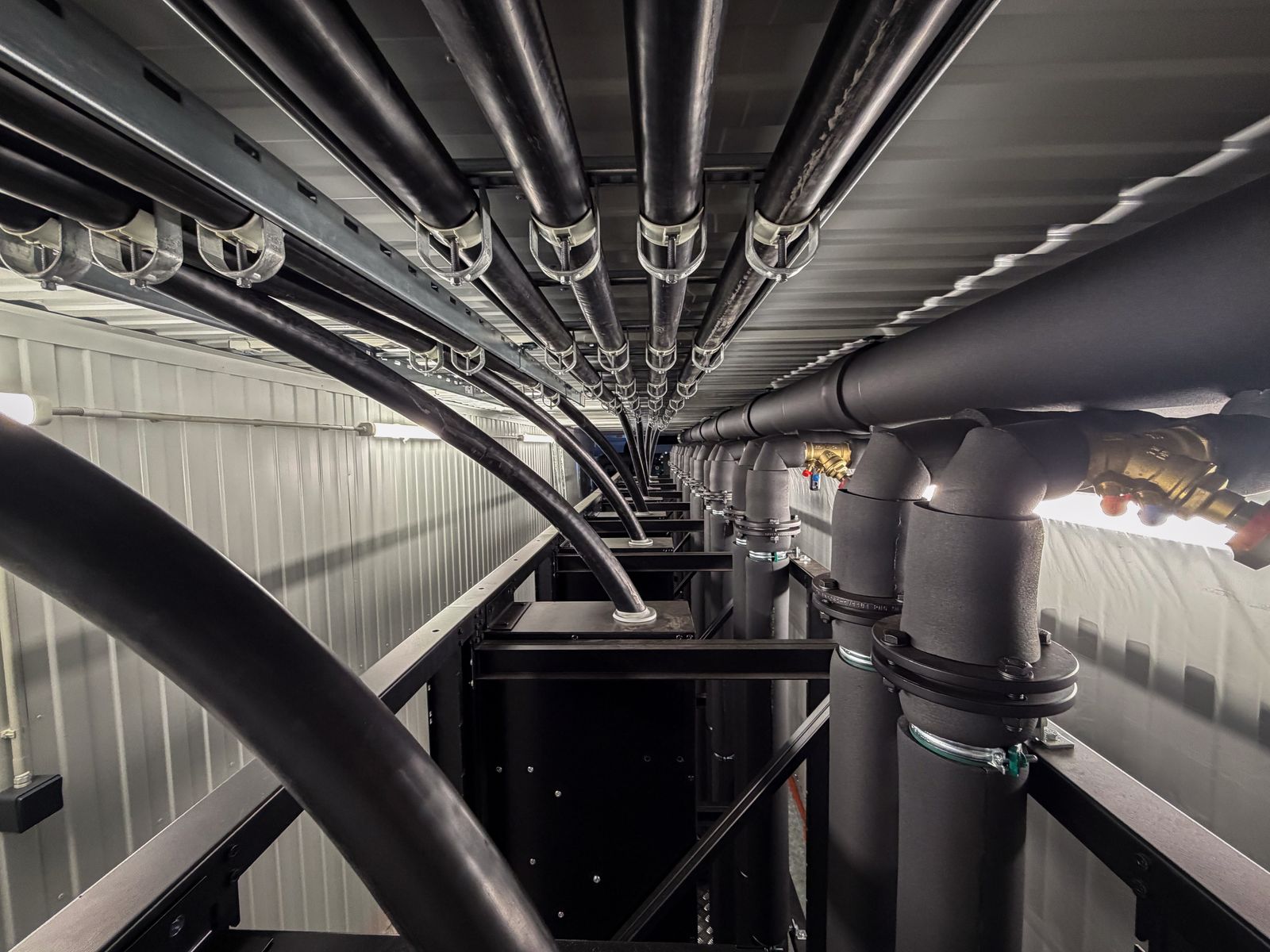
Each center accommodates 162 ASIC miners (such as Antminer S17, S19 and S21) and can deliver up to 600 kW of computational power. The excess heat from the extraction process is recovered and connected directly into the district heating network, so that the electrical energy is maximized.
One data center uses approximately 1.6 MW/h of electricity and achieves 95% energy efficiency — which means that as much as 1.52 MW/h can be supplied as heat energy to the municipality.
In a year, one such device can mine up to 9.7 bitcoin and heat about 2,000 homes.
The data centers are being built in Latvia, with a starting price of around 300,000 euros. In addition to more than a hundred professional data centers, Power Mining has also developed open source desktop miners, of which over 20,000 units have been sold globally.
European data centres already account for more than 3% of the continent's electricity consumption - equivalent to more than 150 TWh annually, about as much as all of Poland consumes.
Up to 40% of this is converted into heat, which is most often released directly into the atmosphere. If this heat were collected and recovered, it could heat up to 10 million European households, according to the European Commission.
Power Mining's solution is a concrete example of how data infrastructure and heat recovery can contribute to energy conversion. While traditional data centers typically collect heat of around 27 °C, Power Mining's systems can recover heat up to 65 °C, adapted to modern district heating networks in cities.
You have read what you can read for free. With an account you get unlimited access to all news and articles on kaupr.io — and become part of the network of investors, professionals and builders following onchain finance.