

The BankID app is developing into a digital ID wallet along the lines of the EUs eIDAS 2.0 framework, says Stø CEO Øyvind Westby Brekke. The ID card in the app is used by 2.5 million Norwegians, and a new activity-history feature launched today.
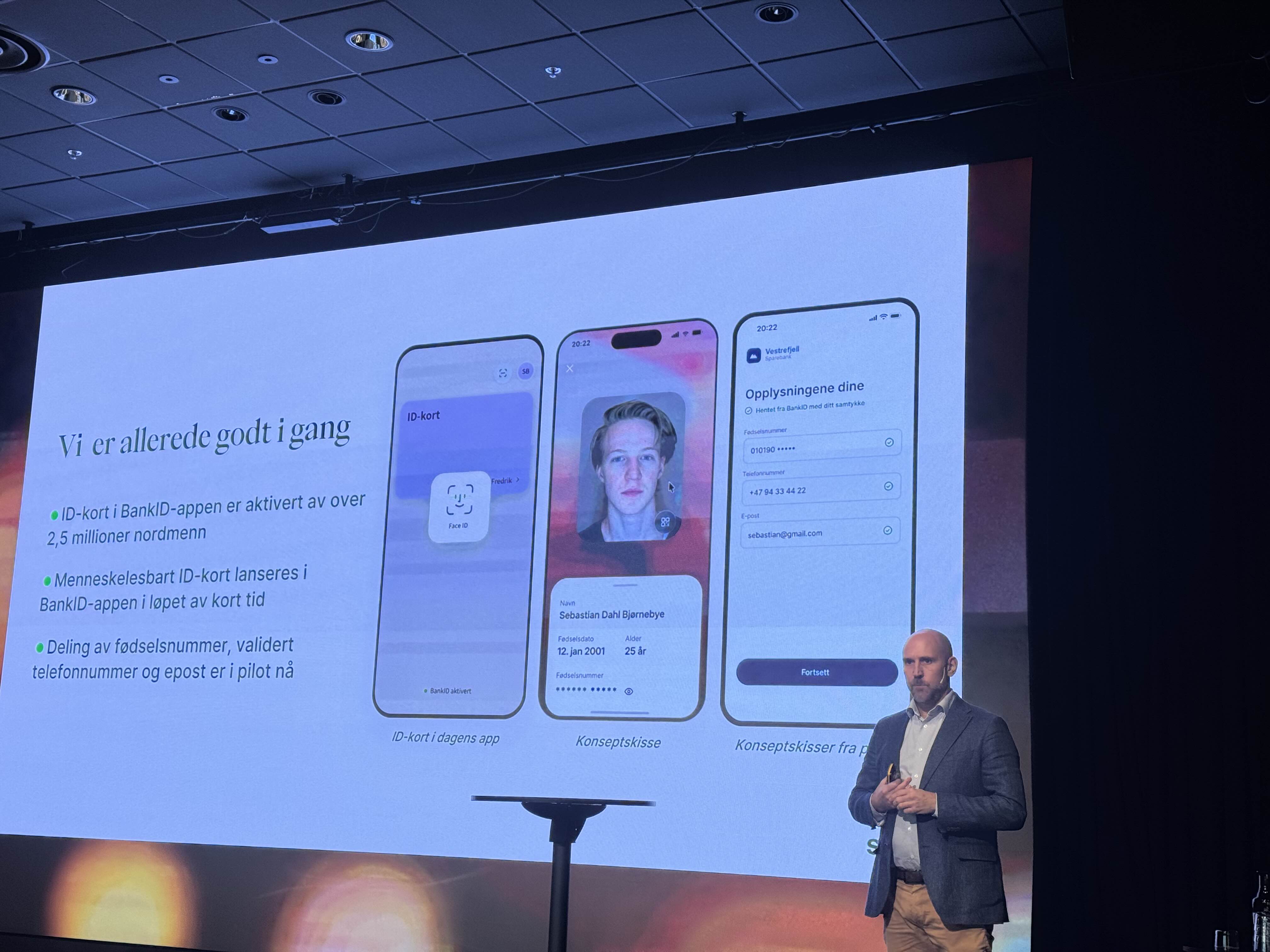
Photo: Øyvind Westby Brekke at the Payments and Digitalization Conference
Norway's BankID is being rebuilt from a pure login and signing tool into a broader digital ID wallet, along the same principles the EUs eIDAS 2.0 framework sets out for European ID wallets. Øyvind Westby Brekke, CEO of Stø, presented the status at Finans Norge's payments and digitalization conference. Stø is currently the sole issuer of BankID, after responsibility was moved from the banks to Stø on October 1 this year.
The first wallet service Stø has rolled out is an ID card in the BankID app, which works as identification in physical settings — for example to prove age when buying energy drinks at a grocery store, or identity when picking up a parcel at the post office. 2.5 million Norwegians have now activated the ID card, and usage is growing 10 percent month over month. In October the card was used 550,000 times.
Brekke says Stø is working on a more physically readable version of the ID card, for use in situations where the merchant can't scan a QR code — for example in a queue at a venue, or when voting in the next parliamentary election. For merchants that want higher security, it will still be possible to scan the QR code and share only the information needed for the situation, such as age or name.
Stø launched a new feature on Thursday that lets users see where BankID has been used, available under profile in the app. Brekke says the feature is important for giving users traceability on their own BankID use, for example if they suspect they've been the target of fraud. The feature is ready for iPhone users now, while Android users will have to wait about a week longer.
Stø has also invested in a new anti-fraud system that flags unusual or suspicious usage patterns. Several banks have taken an aggressive approach by closing the customer relationship when they get an alert, and according to Brekke this has reduced identity theft from hundreds of millions of kroner to near zero at those banks.
Stø is running two pilots for data sharing through the BankID app, where the user chooses to share verified data with a third party. In one case, with the car marketplace Vend, the user can share their national ID number in connection with buying or selling a car. In the other, a healthcare use case, the user can share a verified phone number.
Brekke says Stø also envisions making other public data sources available through the app, such as driver's licenses via the Norwegian Public Roads Administration, which is already integrated with BankID. The model is built on the same principles and data protocols that the eIDAS framework provides for.
– We're not planning to wait until 2030, says Brekke, referring to the timeline for Norway's implementation of the EUs eIDAS 2.0 framework. Stø hopes to play a role when the digital ID wallet is introduced in Norway, but is continuing to build out the BankID app in the same direction regardless in the meantime. Brekke says the company feels a strong responsibility toward merchants, users and society as a BankID provider, and that this responsibility will be met regardless of what role Stø ends up playing in Norway's implementation.
Sources: Stø
You have read what you can read for free. With an account you get unlimited access to all news and articles on kaupr.io — and become part of the network of investors, professionals and builders following onchain finance.