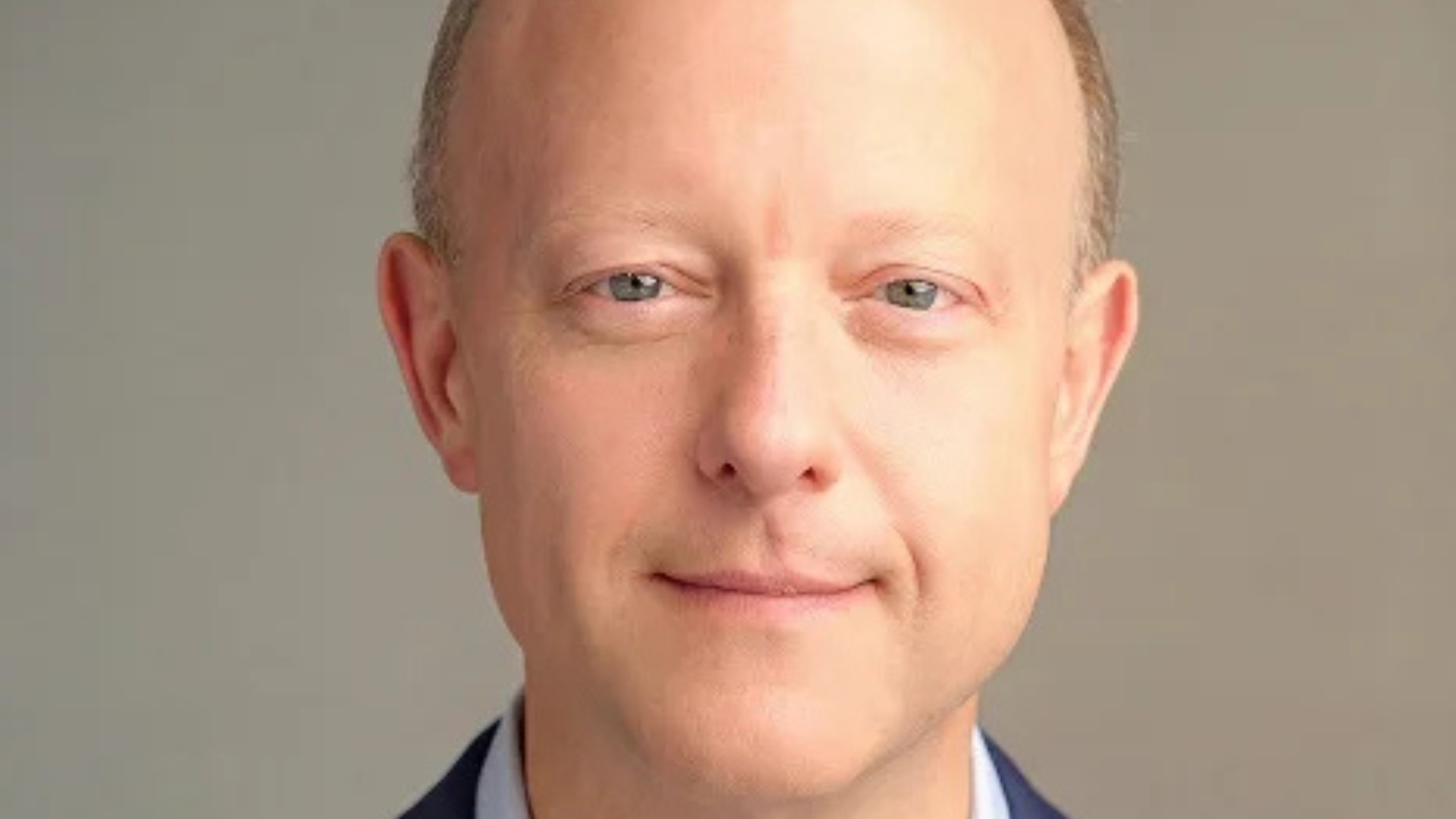
AllUnity launched the Swedish krona (SEKAU) as its third regulated stablecoin this week. CEO Alexander Höptner explains why Sweden is the perfect place in the Nordics to start — and confirms five to six new currencies by autumn.
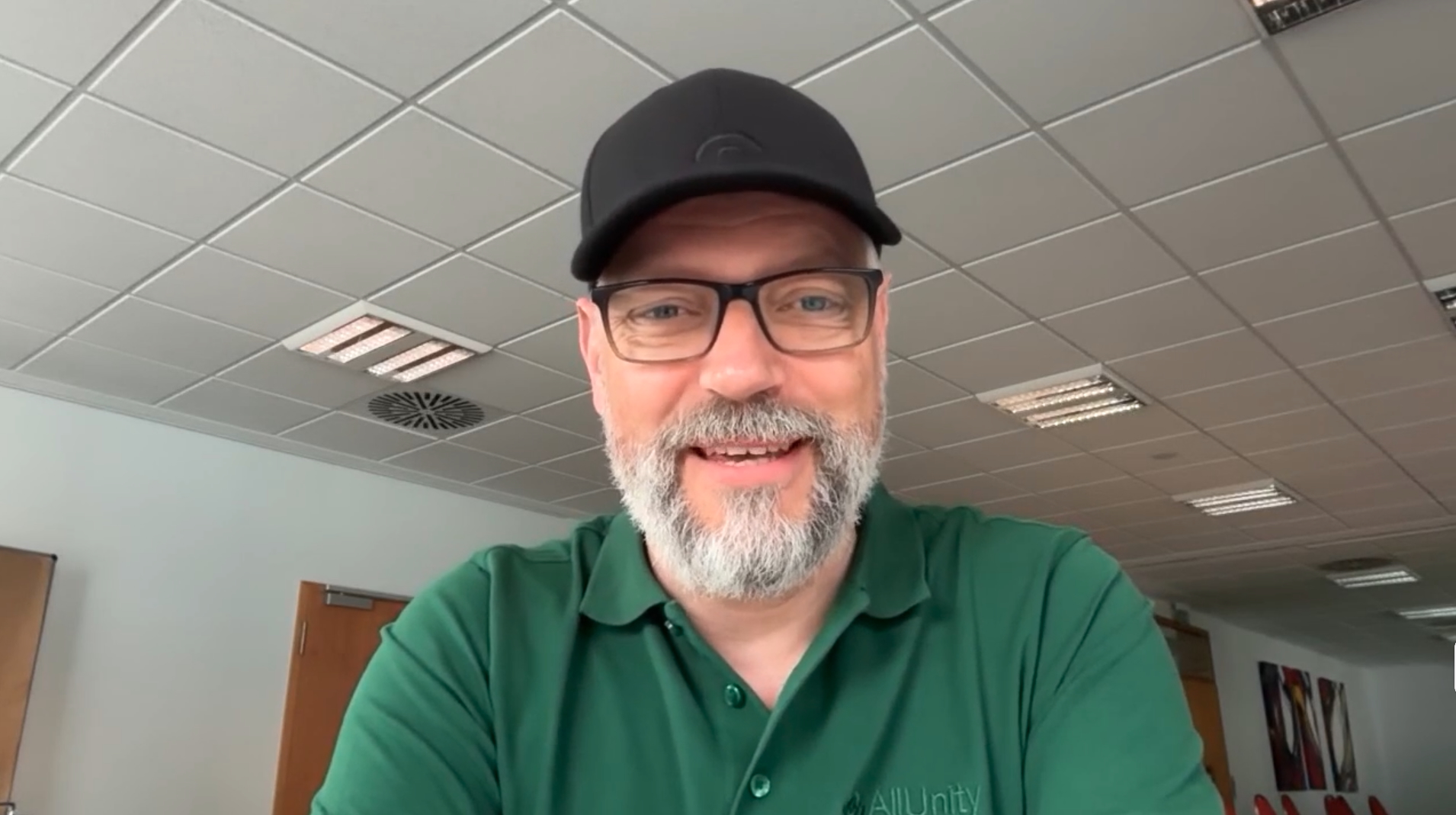
AllUnity is a Frankfurt-based electronic money institution, established by asset manager DWS, market maker Flow Traders, and crypto finance firm Galaxy. The company is regulated under the EU's MiCA framework and targets corporations with cross-border payment and treasury needs — not consumers or crypto exchanges. Kaupr interviewed CEO Alexander Höptner remotely in connection with the launch of SEKAU.
"Sweden is very technically driven and savvy. There are many Swedish companies with subsidiaries and branches all over Europe — a lot of capital flow and a lot of interaction. For us, it is a perfect starting point in the Nordics. And when you start reaching out, you find that there is genuine interest. That is the perfect foundation for a launch," says Höptner.
Sweden occupies a distinct position among the Nordic countries: closely integrated with the eurozone through the EEA agreement, but retaining its own currency — creating the kind of currency friction AllUnity is designed to resolve. The shared European regulatory framework also makes it technically straightforward to offer SEKAU across the EU without seeking separate licences in each country.
For Swedish companies with European subsidiaries, the problem is concrete: cross-border settlements that currently require two currency conversions and take days can, with a local stablecoin, be completed with one conversion and near-instant finality. Höptner points to large, internationally oriented corporations with ongoing capital flows between Sweden and the rest of Europe as the core market.
AllUnity positions stablecoins not as a crypto asset, but as a payment instrument on par with e-money. It is a distinction Höptner is emphatic about.
"Stablecoins are cash or cash equivalent. They are not a crypto asset. They are not an asset like Bitcoin or stocks. They are a payment mechanism — and they should be treated as that," says Höptner.
MiCA — the EU's Markets in Crypto-Assets regulation — governs stablecoins under the label of e-money tokens. The regulation's name creates confusion: stablecoins end up in the same category as Bitcoin, even though their function and legal status are closer to cash than to investment products. Höptner argues this labelling generates unnecessary resistance in the corporate world and among regulators — a legacy of a time when tokenisation was new and regulation had to cast a wide net.
Höptner distinguishes between three categories of digital money: central bank digital currencies (CBDCs), deposit tokens issued by commercial banks, and e-money tokens regulated under MiCA. All three will coexist, but serve different purposes — and for cross-border corporate payments, he believes stablecoins win.
CBDCs work within a central bank's jurisdiction, but face a fundamental global constraint: the United States has announced it will not issue a CBDC. That means European CBDCs stop at the EU's external border. Deposit tokens work well within a single bank's ecosystem, but scale poorly for multinationals with subsidiaries in different countries where banks carry different reserve profiles.
"If we in Sweden and Europe start with CBDCs, it ends at the border of Europe. That does not help us with transactions across continents," says Höptner.
Höptner describes a scenario in which users increasingly rely on AI agents to gather information on their behalf, without visiting websites directly. These agents execute microtransactions for each piece of content they retrieve — payments that conventional infrastructure is not built to handle at the required scale and speed.
AllUnity is launching a payment solution based on the open standard x402, enabling AI agents to pay for content automatically using stablecoins. Content producers that block agents because they cannot pay risk becoming invisible in an economy where agents are the primary search interface.
"If content is blocked for agents, the agent will treat it as if the content does not exist. For the content producer, that means you simply disappear," says Höptner.
AllUnity currently holds three currencies in its portfolio: euro (EURAU), Swiss franc (CHFAU), and Swedish krona (SEKAU). Höptner confirms the company plans to launch five to six new currencies after the summer break — a mix of G7 currencies and European currencies outside the eurozone. Dollar is confirmed as a future addition, though without a timeline.
"Dollar is definitely on the roadmap. It has to be. Global trade still runs on it," says Höptner.
Kaupr has previously covered the SEKAU launch itself, including technical details on reserve structure and regulatory framework. [link to existing article]
Sources: Exclusive video interview with Alexander Höptner, CEO of AllUnity (Kaupr, May 2026), AllUnity
You have read what you can read for free. With an account you get unlimited access to all news and articles on kaupr.io — and become part of the network of investors, professionals and builders following onchain finance.