

Nvidia loaned its own customers money to drive demand, sought Wall Street's help to finance even more purchases, and let banned chips reach China via Southeast Asia — all exposed after Jensen Huang's departure.
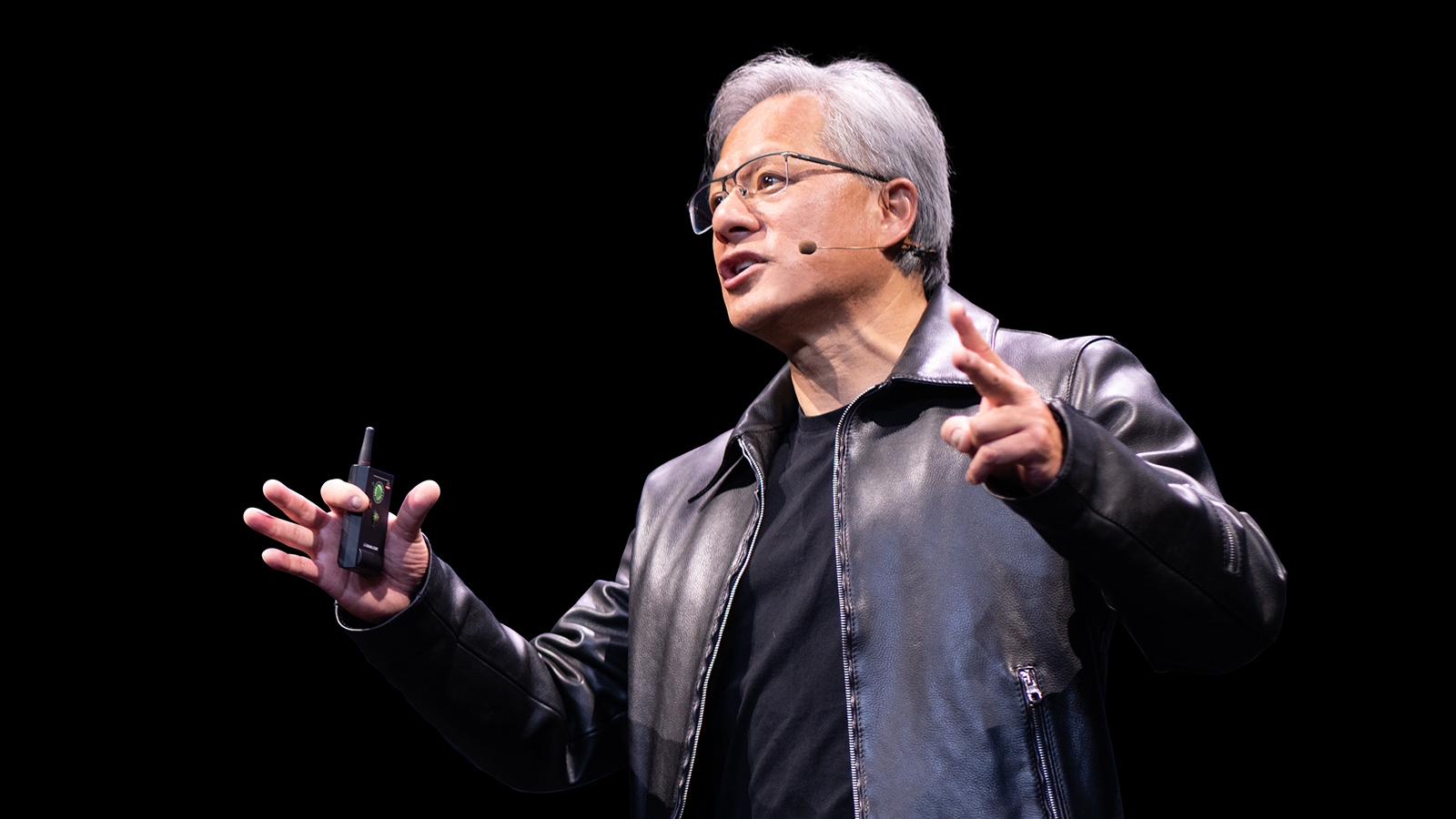
Photo: Jensen Huang, former Nvidia CEO
In the days after Jensen Huang stepped down as Nvidia's CEO, several established outlets — the Wall Street Journal, Bloomberg, CNBC, the Financial Times and the New York Times — have reported on three separate tracks in how the company has financed its own growth. One concerns loans and guarantees to its own customers, the second an attempt to bring in outside capital from Wall Street, and the third how banned chips have found their way to China. Together, the reporting paints a picture of a company that has used several levers to keep demand for its own chips up, while its leadership has internally been divided on how far it is defensible to go.
Nvidia has built what is known as circular financing: the company invests in or guarantees loans to its own customers, who in turn use the money to buy Nvidia chips. According to the Wall Street Journal, there was internal disagreement over the practice — Huang and CFO Colette Kress are said to have differed on the OpenAI deal and the scope of the guarantees. Kress pushed in August 2026 to scale back certain deals, but according to TechSpot she also pushed for more deals later in 2026 to absorb TSMC's excess capacity. She and Huang together defended the company against comparisons to Enron.
PitchBook has mapped Nvidia's footprint as a venture investor in the AI sector, and the IMF described in an October 2026 note how such financing could affect financial stability in the AI ecosystem. J.P. Morgan analyst Michael Cembalest described in a November 14 note how the model makes Nvidia dependent on its customers' growth continuing.
In August 2026, Nvidia launched a plan to raise $500 billion in outside financing through a compute financing platform, with capital from Apollo, BlackRock, Blackstone, Brookfield, Goldman Sachs and KKR. The goal was to let others carry more of the risk as Nvidia's customers buy even more chips.
According to Bloomberg, as reported by Dealroom.co, the platform has yet to produce a single deal. Lenders want more security than the 25 percent in residual value support Nvidia has offered — by comparison, Broadcom has given Anthropic 72.5 percent in a similar structure. As of July, Nvidia had already extended $36 billion in guarantees to neoclouds and a $105 billion guarantee tied to OpenAI's Ohio data center. The launch of the new platform could be delayed until January.
According to the Wall Street Journal, as reported by MLQ.ai, the Chinese company Megaspeed arranged roughly $12 billion in Nvidia chip orders to China between March 2024 and June 2025 — in violation of US export controls. Yahoo Finance and TechCrunch have also reported finding export-banned Blackwell chips in Chinese open-source AI models.
Fox Business has covered a May 2026 Culper Research report that links Megaspeed to Alibaba through shell companies. Fast Company has described how Huang used chip-sale revenue to finance a wider network of startups and suppliers.
Nvidia's stock fell 13 percent after Huang's departure became known, according to CNBC, before recovering part of the drop. Analysts including Charu Chanana (Saxo) and Sunaina Sinha Haldea (Raymond James) have pointed to the risk that the financing deals depend on one specific person continuing to lead the company — CNBC describes Huang's role as a mix of "central bank" and "hypeman" for the AI sector.
The Financial Times, as reported by Reuters, writes that Huang is discussing a comeback as CEO with confidants, and that allies are lobbying the board for his reinstatement. Business Insider reports that a petition to reinstate him has gathered more than 100,000 signatures, including well-known names. Investor Anthony Scaramucci rejected the idea in a post on X on November 15, citing an ongoing FBI counterintelligence review, a DOJ investigation into chip smuggling, an internal review by law firm Wachtell, and Huang's relationship with a subordinate employee.
Sources: Wall Street Journal, techpowerup/Wccftech, TechSpot, J.P. Morgan, Bank for International Settlements, International Monetary Fund (IMF), PitchBook, Nvidia, TechCrunch, Investing.com, MLQ.ai, Fox Business/Culper Research, Fast Company, Bloomberg/Dealroom, CNBC, Financial Times/Reuters, New York Times, Business Insider, Anthony Scaramucci (X)
You have read what you can read for free. With an account you get unlimited access to all news and articles on kaupr.io — and become part of the network of investors, professionals and builders following onchain finance.