
At Bitcoin 2026 in Las Vegas, David Marcus and Lightspark launched Grid Global Accounts — a platform for global accounts, stablecoin payments, Visa cards and AI-driven transactions. The company no longer wants to be just a Bitcoin company.
Lightspark has long been known as a Bitcoin and Lightning company. With the launch of Grid Global Accounts in Las Vegas, it is now positioning itself as something considerably broader: a provider of infrastructure for global accounts, stablecoin payments, Visa cards, local payouts and transactions driven by artificial intelligence. For the fintech market, it may be equally significant that Bitcoin is not necessarily what the user sees — it could just as well be a dollar account, a Visa card or a local bank transfer. Under the hood, Lightspark routes transactions over Bitcoin, stablecoins, existing rails or a combination of all three.
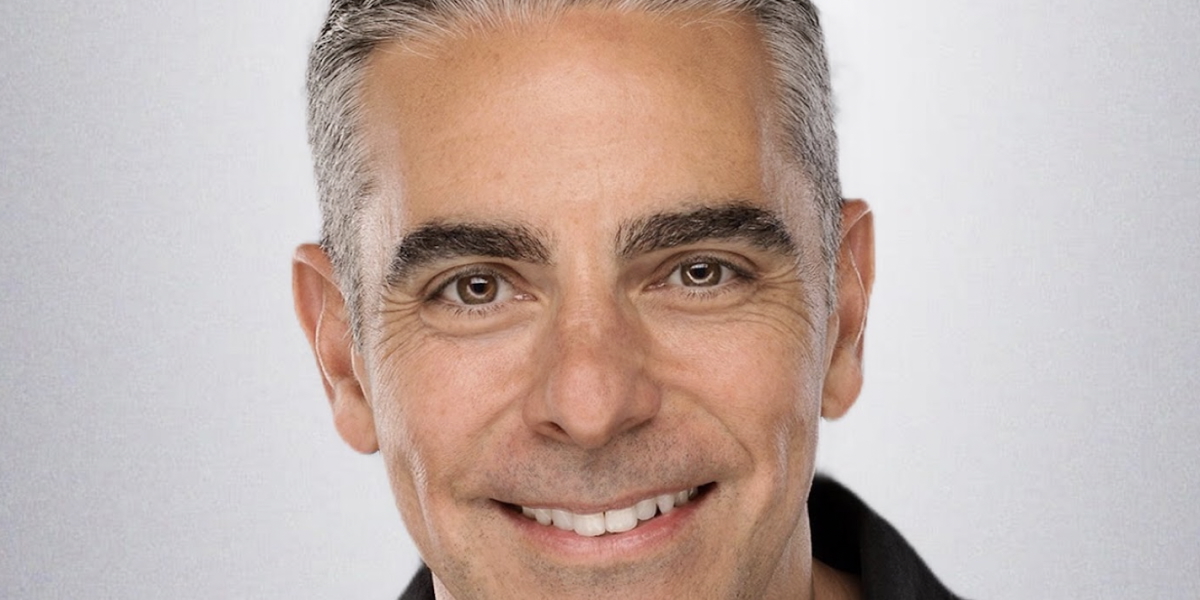
David Marcus is not a typical crypto founder. He was previously president of PayPal, led Messenger at Meta, and started Diem — formerly known as Libra — Meta's attempt to build a global payments infrastructure. Libra faced fierce regulatory opposition and was eventually shut down. The Diem Association sold its assets to Silvergate in 2022.
With Lightspark, Marcus can be read as making another attempt to solve the same fundamental problem: how money can move globally as easily as information. The difference is that Lightspark builds an API-based platform on top of Bitcoin, stablecoins and existing payment networks — not a new global currency controlled by a technology company. Marcus has argued that the lessons of Libra shaped what Lightspark is now building, and that the solution must be open, global, cheap, real-time and built on a more neutral payment network.
Lightspark started with Bitcoin, but the company is now working to nuance its identity. Christina Potter, VP at Lightspark, writes in a LinkedIn post that the company "started with Bitcoin", but that this is only "half the story". She points to two years of building a broader platform for stablecoins, crypto and fiat conversion, describing the ambition as rail-agnostic with support for P2P, B2B and B2B2C transactions.
Grid is the company's umbrella term for this infrastructure — a single API for sending, receiving and settling value globally, with support for fiat, stablecoins and bitcoin. Lightspark states that Grid connects to local payment networks in 65 countries and more than 14,000 banks, mobile money operators and digital wallets. In Europe, the documentation covers Norway, Sweden, Denmark, Finland and Iceland, with SEPA and SEPA Instant listed as supported rails.
One of the most significant elements of the launch is the Visa partnership. Lightspark has become a principal member of the Visa network to expand stablecoin-based payment services and bring crypto infrastructure closer to traditional card payments. Grid Global Accounts will offer end users virtual and physical Visa debit cards accepted at more than 175 million merchant locations globally. The solution initially covers 33 countries, with a stated target of 100 Visa markets by the end of 2026.
This is strategically important because it moves Grid Global Accounts beyond pure infrastructure for digital transfers into a consumer and merchant layer. Stablecoin and bitcoin balances can be spent within existing payment networks without end users needing to engage with the underlying technology.
Stablecoins are the most strategically significant part of Grid Global Accounts. Lightspark describes the product as a complete platform that lets other platforms offer branded dollar accounts backed by their own stablecoin, while Lightspark handles licensing, KYC, card issuance, global rails, regulatory reporting and fraud monitoring.
In practice, a user can pay in one currency while the recipient receives local currency in a bank account — with stablecoins serving as an invisible settlement layer in the background. Grid supports both prefunded accounts and just-in-time funding, as well as mechanisms that let senders lock either the amount sent or the amount received. This makes the solution relevant for global payouts, payroll, supplier payments and treasury management alike.
The most forward-looking part of the launch is support for AI-driven payments. Lightspark calls this "AI Agent bounded delegation" — where an AI agent can be assigned its own, ring-fenced and funded payment account with spending limits, approved recipients, an audit trail and the ability to revoke access immediately.
Marcus described it at the launch as: "the agent plans, the policy decides, and the account enforces." For banks and fintechs, this remains early-stage, but the direction is clear: if AI agents are to buy services, pay suppliers or manage smaller operating budgets, they will need payment accounts with built-in policies and full traceability. That is a new category of infrastructure that has not previously existed.
For the Bitcoin community, Grid Global Accounts is interesting because Lightspark still builds on Bitcoin as a neutral settlement network. But for the broader fintech market, it may be even more significant that Bitcoin is not necessarily what the user sees. What the user sees could be a dollar account, a Visa card, a local bank transfer, a stablecoin balance or an AI agent with a limited budget. Under the hood, Lightspark can route the transaction over Bitcoin, stablecoins, existing rails or a combination — and that is why the launch should be understood as more than a Bitcoin story.
Lightspark positions Grid Global Accounts as an answer to a classic problem for platforms that move money on behalf of their users. They build the product, acquire the users and generate the transactions — then pass the revenue on to banks, payment processors and card networks.
With Grid Global Accounts, Lightspark argues that platforms can earn interchange on Visa transactions, retain yield on stablecoin balances and take margin on currency and bitcoin conversion. The payments platform thus becomes a new revenue layer for platforms that already own the user relationship — and that may be as compelling a commercial argument as the technology stack itself.
You have read what you can read for free. With an account you get unlimited access to all news and articles on kaupr.io — and become part of the network of investors, professionals and builders following onchain finance.