Danske Penning has received a MICA license as a Crypto-Asset Service Provider and becomes the first Nordic platform to combine regulated crypto trading with portfolio management approved by the Danish Financial Supervisory Authority.

Penning is based in Copenhagen and targets both private and professional investors in the European market. The MICA license allows the company to offer regulated crypto services across the EEA, and Penning positions itself as a Nordic player for investors demanding increased predictability and oversight in the wake of previous industry scandals.
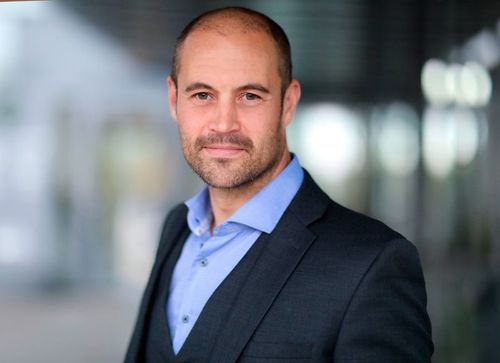
Penning is led by Jimmie Steinbeck, CEO (left in picture) and Hasan Surtiwala (Chairman of the Board). Photo: Morten Brun/Kaupr
With the MICA license, Penning can offer seven regulated core services, from crypto asset custody and trading to portfolio management through the Penning Invest service. While several other regulated players either focus on trading or management, Penning highlights that the platform brings both together within the same supervisory framework.
“MiCA has fundamentally changed the rules of the game. While others see regulation as a barrier, we see it as the foundation of confidence this industry needs. For Penning, this is not the goal line, but the start of building the leading crypto infrastructure in the Nordic region,” says Jimmie Steinbeck, CEO and co-founder of Penning.
Penning Invest is described as Denmark's only Finansinspektion-approved crypto asset management service. The service gives clients access to professionally managed portfolios through three strategies: Save (conservative), Grow (balanced) and Trade (more dynamic), with automatic rebalancing and visibility into the portfolio composition.
The platform also emphasizes that customers should have real ownership of their crypto assets. Unlike services such as Revolut and Lunar, where users cannot withdraw crypto, Penning opens up the possibility for investors to transfer their funds into their own wallets at any time.
The license comes during a period in which the European crypto market is both growing and characterized by realignment. Around 300,000 Danes currently own crypto, and that number is expected to triple over the next decade.
At the same time, it is estimated that Danes lost NOK 95 million to investment fraud in 2024, giving regulated players a clearer space in the market. MICA regulations are intended to make it easier for consumers to distinguish between regulated and unregulated platforms.
“After the FTX bankruptcy, trust has become the most difficult currency in crypto. Our clients now use a platform that meets the strictest requirements of European financial regulation. This is institutional-level infrastructure, built from the Nordic countries,” Steinbeck says.
The MICA approval gives Penning the right to “passporting” its services to all EU and EEA countries without new national approvals. The company plans to enter Sweden and Norway during the first half of 2026, and then Germany and the Netherlands.
The license also opens up cooperation with banks, wealth managers and fintech players who want regulated crypto infrastructure. According to Penning, the goal is to be a partner for institutions that will offer crypto exposure within a framework that satisfies European supervisory and investor protection requirements.
Founded in Copenhagen in 2021, Penning offers trading in over 200 crypto assets, cross-chain swapping via the Native Swap service and portfolio management through Penning Invest, combined with automatic Danish tax reporting.
You have read what you can read for free. With an account you get unlimited access to all news and articles on kaupr.io — and become part of the network of investors, professionals and builders following onchain finance.