BTCX is no longer the counterparty to its customers' trades, but executes their orders against external liquidity sources. Goobit describes this as adapting to MiCA. The new accounting sharply lowers reported revenue but not gross profit.

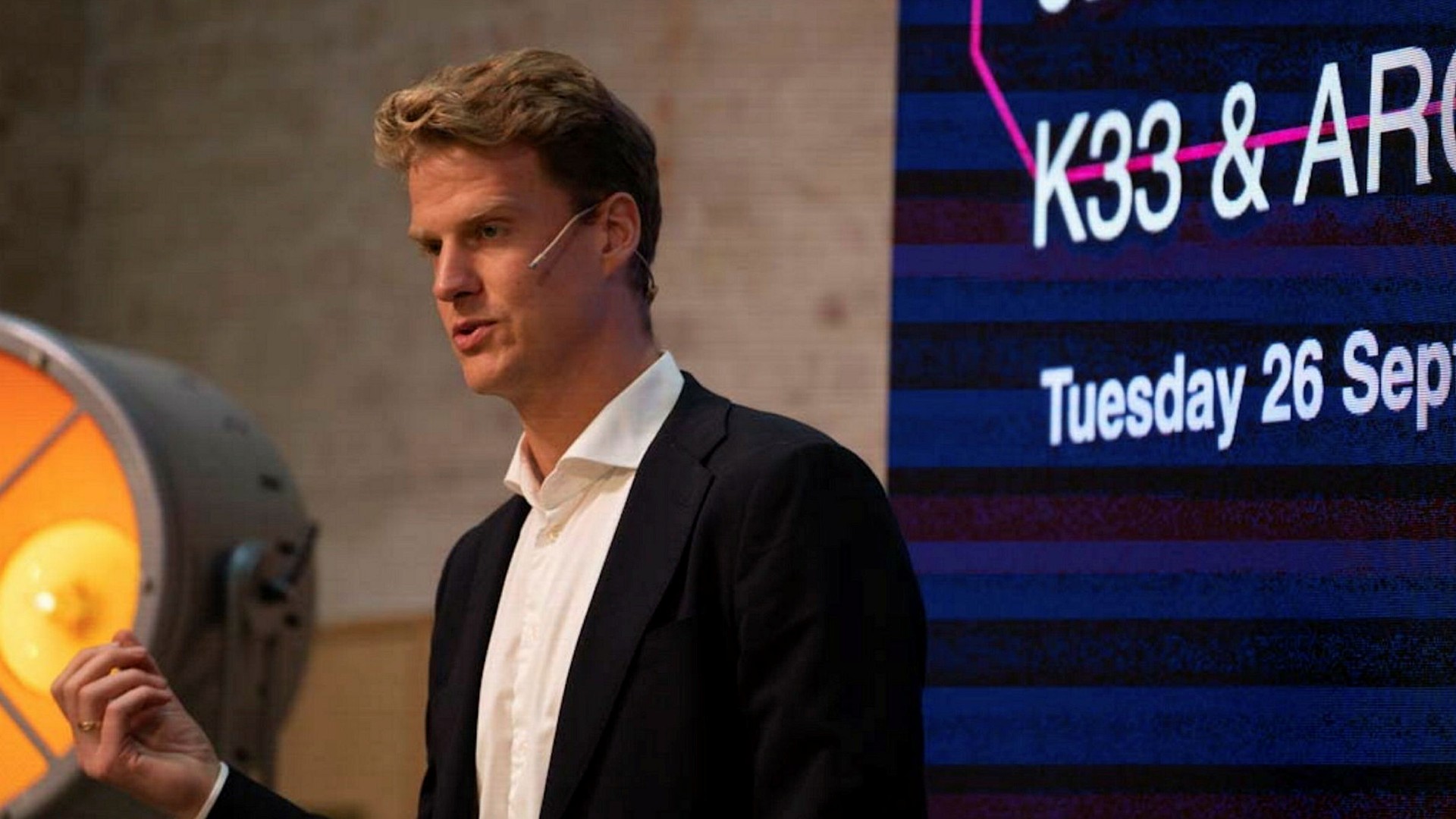
Gustav Buder is chief executive of Goobit Group, the company behind BTCX.
Until 18 August, BTCX was the counterparty to its customers' trades. Since then, customer orders have been executed on the customer's behalf against external liquidity sources, much as a broker places orders in the market. Goobit disclosed the change as inside information on Thursday evening.
"With Execution of Orders, we execute every customer order against market liquidity rather than against our own inventory. That gives the customer clearer insight into pricing and makes the business less capital-intensive and easier to scale."Gustav Buder, who took over as chief executive of Goobit Group on 15 August
Goobit describes the change as part of its adaptation to MiCA, the EU's regulation on markets in crypto-assets. The regulation distinguishes between exchanging crypto-assets using the provider's own capital and executing orders on behalf of clients. Under the latter model, which Goobit has now adopted, the company acts on the client's behalf and is required to seek the best possible result for the client.
According to Goobit, the model reduces capital tied up, inventory risk and price exposure compared with principal trading, in which the company is the direct counterparty. At the same time, the company becomes more dependent on access to external liquidity, which Goobit says it manages through established procedures for order execution and counterparty monitoring.
The change also alters how the trades are accounted for. Transactions are now recognised on a net basis, meaning the value of customers' trades is no longer counted as Goobit's revenue. Reported revenue and exchange costs therefore fall significantly. According to Goobit, the change does not affect gross profit, the rest of the income statement and balance sheet, or transaction volume.
Had the net method been applied to all exchange services in the 2025/26 financial year, revenue would have been about SEK 12.4 million, against a reported SEK 97.1 million. For the fourth quarter, the figure would have been about SEK 4.6 million, against a reported SEK 24.2 million. Gross profit for the same periods, SEK 10.5 million and SEK 4.1 million, is the same under both methods.
Because the model went live on 18 August, the second quarter of the 2026/27 financial year will show only a partial effect, with gross accounting up to and including 17 August and net accounting thereafter. The third quarter will be the first full reporting period under the new model.
Goobit will continue to report transaction volume as a supplementary key figure. It is defined as the total value of executed customer transactions and corresponds to revenue under the previous accounting principle. The company says it will provide a reconciliation against reported revenue in upcoming interim reports.
Sweden's financial supervisory authority, Finansinspektionen, rejected an application on 2 July from Goobit AB, the group's regulated subsidiary, for authorisation as a crypto-asset service provider under MiCA. The regulator has confirmed to Kaupr that the rejection was based on deficient internal control and weaknesses in its risk assessment on money laundering and terrorist financing.
Goobit first asked Finansinspektionen to reverse the decision, but the regulator upheld the rejection. The company then took the case to Förvaltningsrätten i Stockholm, the administrative court. Finansinspektionen confirmed to Kaupr in August that BTCX may continue operating in Sweden while the appeal is heard.
Sources: Goobit Group, Kaupr
You have read what you can read for free. With an account you get unlimited access to all news and articles on kaupr.io — and become part of the network of investors, professionals and builders following onchain finance.